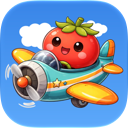
Turning flight theory into 88 hands-on mini experiments: a private-pilot app from a father and son in Florida, carefully built but not yet taking off
What it is A US private pilot certificate (PPL) ground-school app: Duolingo-style two-minute lessons with 88 interactive experiments you manipulate by hand (drag a wing to stall it, load cargo and watch the center of gravity, adjust the mixture), sold as weekly, monthly, or annual subscriptions. It's the first app from a father and son in Florida.
Why it's getting attention It isn't really catching on yet. The son, a professional pilot, promoted it in Facebook pilot groups and on Instagram, and it reached about 1,000 downloads in three weeks. It only got noticed because it charted sporadically in education Top Grossing lists in small countries like Cyprus and Finland, where one or two subscriptions can put you on the chart. In the US store it had only 34 ratings after three and a half months.
CHow you could follow it Don't build US private-pilot theory again. Take the "interactive experiments + levels" format to certifications nobody has done this way yet (drone Part 107, A&P mechanic, amateur radio, captain's license, CDL truck license), and cold-start it inside study communities run by credentialed insiders. Either price it low enough to be an impulse add-on, or get signed certification and sell it as a proper course.
Est. monthly revenue (App Store) $1K–10KWe estimated this from its chart ranks and rating growth across storefronts, calibrated against verified revenue; typical error is 2–3x. Read it as a tier, not an exact number.
- Data (updated daily) · Launch 2026-07-28 · Finland rating 1 · 11-20 charting in 1 stores
iOS · best category chart rank · by store CYFinlandRomaniaData 2026-11-02 → 2026-11-19 (18 days, 9 observations). Lower rank is higher; gaps mean it wasn't charted that dayiOS · rating count · Finland Data 2026-11-02 → 2026-11-19 (18 days, 4 observations). Apple doesn't publish download counts; rating growth is a proxy for downloads.
Tomato Planes turns the ground-school portion of the US private pilot certificate (PPL) into Duolingo-style two-minute lessons, backed by 88 hand-drawn interactive diagrams: drag a wing to watch it stall, load cargo into a plane and see the center of gravity leave its envelope, adjust the mixture yourself. Three and a half months after launch it has 34 ratings in the US store at a 4.8 average. Users who tried it say it's good, but volume is tiny, and several people have already built the same idea this year. What's worth studying is the "interactive experiments + levels" format, not its growth.
A review complaining the pricing is absurd
In 2026 Jul 28, Tomato Planes launched in the US App Store. Four days later, Aug 1, it received its first written review: 3 stars, with a one-word title, "Pricing":
App is good for what it offers, but the pricing is absurd. At that price point, you can get a full online ground school course and get endorsement for your written.
Developer reply: the weekly plan is only $4.99, and the monthly plan is only $15.99.
Two and a half weeks later, on Aug 19, co-founder Gary Repace published a LinkedIn post titled "From the Flight Deck to the App Store." He earned his private pilot certificate three years earlier; his son Nicholas is now a professional pilot and came up with the idea. Gary brought 30 years of experience in business operations and corporate work. The two registered True Course LLC in Florida. "This week we hit a milestone beyond what we expected: 3 weeks, 1,000+ downloads." The day before, the same numbers and content list were also posted to a Facebook pilot group called "The Aviation Community."
Taken together, these two events are nearly the whole story of this app: the product is solid and some people like it; the price and positioning have real flaws; and users have come almost entirely from people within the community sharing it themselves.
What it is
An English-only, iPhone and iPad-only US FAA private pilot ground-school app, current version 1.2.6 (10-27).
Content volume (announced by the founder 08-18 in a Facebook group): 11 chapters, 195 nodes, 170 lessons, 1,921 slides, 1,008 scored questions, 88 hand-drawn interactive diagrams, and not a single stock image in the whole app. The interactive experiments are what set it apart:
- Drag the plane around to see how lift, weight, thrust, and drag change; pull the wing into a stall
- Load real center-of-gravity envelopes with people and fuel, and see when you go out of bounds
- Step on the rudder to center the slip-skid ball; see why the vertical speed indicator lags
- Decode an airport weather report (METAR), inspect a cold front cross-section, calculate density altitude
- The new version of 10-27 turns the 'aircraft systems' chapter into hands-on practice: test the magnetos, watch oil pressure, lean the mixture at altitude, pull carb heat when there's icing, and finish with a full engine run. The update notes say: 'Each one is the system responding to your hands, so you understand the why first, then take the quiz.'
The shell is lifted straight from Duolingo: chapter-based skill tree, streaks, XP, streak freezes, badges, and two-minute lessons that each cover just one point.
Pricing (US App Store page): Premium $4.99 / week, $15.99 / month, or $139.99 / year; Ultimate (adds cross-device sync) $19.99 / month or $172.99 / year; some tiers include a 7-day free trial; the first 4 nodes are free. The store page is candid that this is a study aid and does not replace your flight instructor or the official FAA course. That means it can't sign off on your written test, which is exactly what the 3-star review is saying.
How big it is: very small
| Metric | Numbers | Sources |
|---|---|---|
| US ratings | 34 ratings, 4.79 stars | App Store,11-13 |
| US written reviews | 2 reviews (08-01 of them 3-star "too expensive"; 09-11 4-star "Amazing app") | App Store,11-13 |
| Ratings in other countries | UK 5, UAE 2, Australia, New Zealand, Finland, and Cyprus 1 each | App Store,11-13 |
| Rating growth | 1–2 per week | Rough estimate from third-party page history |
| Downloads | The founder says 1,000+ weeks; the Instagram bio reads '3000+ pilots learning' | LinkedIn 08-19, Instagram |
| Third-party estimate | About 1,600 installs, about 200 monthly active users, and under $10K in monthly revenue, all from in-app purchases | AppGoblin |
| Charts | Only shows up sporadically on small-country education top-grossing charts: #158 in Denmark (10-31), #73 in Finland (11-02), #107 in Romania (11-07), #193 in the Netherlands (11-08), #32 in Cyprus (11-14); it has never charted in the US | App Store category chart |
Ranking #32 on Cyprus's education top-grossing chart sounds good, but that chart is low-threshold enough that a handful of subscriptions can get you on it. Local ratings didn't rise with it, so it only shows that someone is paying, not scale, and doesn't look like local paid acquisition (inference). The real home market is the US, where established US-store competitors have tens of thousands of ratings: two orders of magnitude apart.
Where users come from
Its own Instagram. @tomatoplanesapp has about 5,900 followers, follows 1,200 accounts, and posted 20 times. Before launch, from June it posted 'coming soon' short videos to build a waitlist (the release date on the TikTok bio says Jun 21, but the app actually came out more than a month later). After launch it posted lines pilot students instantly recognize, like 'POV: you have 27 browser tabs open to learn to fly…', and the captions are stuffed with keywords and tags like student pilot and learn to fly. The follower count isn't bad, and mutual follow-for-follow growth is possible (inference).
Facebook pilot groups and LinkedIn. Milestone posts like 'three weeks, 1,000 downloads + 1,921 slides' were shared in the groups with download links. The first 4 nodes are free, with the pitch 'know in ten minutes if it's for you', which keeps the trial barrier very low.
Store search. The subtitle is literally 'Pilot Ground School.' Searching 'ground school' in the US store ranks it #17, which brings in limited volume.
What didn't work: the same-named TikTok account has 3 followers and 14 videos, with a top single-video view count of 97, and nothing has been posted since September. No discussion on X or Reddit, no media coverage. Whether it ran Meta ads can't be found, and judging by how fast ratings grew, even if it did, it wasn't much.
Where the money comes from, and where it gets stuck
All revenue comes from subscriptions and in-app purchases; there are no ads. The audience itself is good: the US issues tens of thousands of new student pilot certificates a year (based on past years' numbers; this year's figure is unverified), and earning a private pilot certificate usually costs over $10,000, so a $15 monthly fee is a rounding error in that budget.
The bottleneck is also clear. Students ultimately must buy a course that can sign off on the written exam: Sporty's, King Schools, Pilot Institute, and the like, which typically sell for about $279 one-time, with video and sign-off, and Pilot Institute even gives away the first 8 hours free. Tomato Planes can't sign off; it can only be an 'extra study aid bought on top,' yet it charges a $139.99-a-year subscription price. That 3-star review is about exactly this, and it's one of only two written reviews in the US store.
Who it's competing with
Private pilot ground school is an old, crowded category with plenty of free content; 'Duolingo for pilots' is not the first to pitch it.
| Competitors | Launched | US rating (11-13) | Compared with alternatives |
|---|---|---|---|
| Sporty's Pilot Training | 2017 | 11,134 | Video course, about $279 one-time, with sign-off |
| King Schools (Test Prep Companion and others) | From ¥2013 | 2,404 (another with tens of thousands of ratings) | Established video course + question bank, with sign-off |
| Ground School(The Finer Points) | 2020 | About 1,800 | Influencer instructors explaining the 'why,' but as video lessons, not a game |
| Private Pilot Test Prep(Aeroapps) | 2019 | 1,536 | Quiz drilling, exactly the rote memorization it rejects |
| Pilot Institute | App 2025-06 | 24 (mainly on the web) | Animated video course + sign-off + free lead magnet |
| FlyCowboys | 2025-10 | 163 | Called itself 'Duolingo for pilots' 9 months earlier, doing adaptive quizzes covering private, instrument, and commercial |
| Airworthy: Private Pilot | 2026-04 | 0 | Gamified private pilot quizzes, same idea |
| Squawkly: Pilot Ground School | 2026-10-28 | 1 | 'Feels like ground school you can fly': short lessons, draggable diagrams, radio calls with ATC, and decoding weather for your own airport. Almost the same positioning, 3 months later |
| pfactor.io | 2026 | Web, free | A free ground school by a Southern California flight instructor, with the same 11 units, diagrams, and quizzes |
| The official FAA handbooks | Has been around all along | Free | The source material for all of these apps |
What it uniquely has is the number and precision of its interactive experiments. Other products are either video courses or gamified quizzes, and nobody has built 88 concepts into small experiments you can handle yourself. But this is not hard to copy: Squawkly's copy already reads almost identically, and in the past 2026 year, with AI writing code, the cost for one or two people to build interactive diagrams like this has dropped fast, which is why several similar apps popped up this year (inference).
A few moves worth copying
Find exams with hard-to-grasp principles where candidates will pay and can only memorize. The 'interactive experiment + two-minute levels' format can be moved to the drone commercial license (Part 107), aircraft mechanic (A&P), instrument ratings, amateur radio, the captain's license, and the US commercial driver's license (CDL). Each has official free study materials as a content base, and each has a group of candidates struggling with quizzes.
Be an insider. It got 1,000 downloads in three weeks, almost entirely from a founder who is a professional pilot posting in pilot groups. For a cold start in a vertical certification market, the cheapest move is the identity of 'I took this exam too.'
Make the first few lessons free, and post with milestone numbers. Concrete numbers like '1,921 slides, 88 hand-drawn diagrams, zero stock images' work better in vertical groups than any ad.
Don't repeat its mistake. Without sign-off and with a premium subscription price, you'll get compared to established courses that sell one-time with sign-off. Either get sign-off accreditation (or partner with a certified instructor), price it where a study aid belongs, or go B2B and sell in bulk to flight schools that hand it out to students.
If it were you
C: you can learn something, but following up isn't worth it. Tomato Planes hasn't proven anything yet: in the US store, three and a half months in, it has 34 ratings, growing one or two a week. In the private pilot ground school category, above it are established sign-off courses from Sporty's and King with tens of thousands of ratings, and below it are a batch of new apps with the same idea like FlyCowboys, Airworthy, and Squawkly, plus free web courses and the official handbooks. What's worth taking away is the format and the cold-start playbook, not this market.
Who it suits: people who hold a certificate or license (flying, drones, mechanics, captain, radio) and understand where candidates get stuck, plus a developer who can build interactive diagrams; someone who can accept slow growth driven mainly by community word of mouth.
Who it doesn't suit: anyone who wants to compete head-on in the US private pilot written test (three or four similar apps this year, plus established ones with sign-off); outsiders who want to copy a template without being in the community; anyone counting on paid acquisition to push a niche tool priced at $140 a year.
How to do it: pick one exam and confirm that the top ten App Store results for it are all quiz banks or video courses, with no 'interactive + levels' version yet; start with the three to five concepts candidates fear most, turn each into a hands-on mini experiment, and make the first few lessons free. Price it either low enough to be a 'casual extra purchase,' or get sign-off or partner with a certified instructor so you can sell it openly as a course.
How to get users: in the Facebook groups, Reddit communities, and Instagram circles for that exam, post 'what I built' and milestone numbers under the founder's own identity; record a 15-second screen video of each interactive experiment, which makes good short-video material on its own (Tomato's TikTok didn't take off, but that doesn't mean the path is dead; it only posted 14 videos). Then approach flight schools and drone training companies and issue codes in bulk.
When to do it before: there's no hard deadline in switching to a different exam; the private pilot category is already crowded, so don't enter it.
What would show you got it wrong: ① If, before February 2027, Tomato Planes' US rating climbs past 300 or it reaches the top 200 of the US education top-grossing chart, that shows the 'interactive experiments' format can drive growth on its own, and the grade should go up; ② if Squawkly or FlyCowboys multiplies its ratings several times within a few months, the category still has room and Tomato just didn't push hard enough; ③ conversely, if Tomato is still in the dozens of ratings six months from now and has stopped updating, then no matter how detailed the product, it can't get past the two hurdles of 'no sign-off' and 'relying on its own posting.'
Research notes: competitor table, acquisition evidence, full research report
- Competitors
Name Where Launched Scale How it differs from this one Sporty's Pilot Training / Learn to Fly iOS 2017 11.1K iOS ratings, 4.89 stars Video course, one-time purchase about $279, with exam sign-off; Tomato is a subscription aid with interactive experiments and gamification, and cannot sign off King Schools(Ground School / Test Prep Companion) iOS 2013 iOS 10.6K + 2,404 ratings Established video course with question bank, with sign-off; Tomato is two-minute short lessons with hands-on experiments Ground School(The Finer Points) iOS 2020 iOS 1,782 ratings, 4.9 stars Influencer-led explanatory course with oral exam practice; also explains the 'why,' but is not gamified or interactive Private Pilot Test Prep (Aeroapps) and Prepware, Dauntless, Gleim, Sheppard iOS 2009–2019 Aeroapps iOS 1,536 ratings; the others have dozens to over a hundred Question bank drilling; Tomato's selling point is precisely rejecting rote memorization Pilot Institute Web App 2025-06 Web course about $279, often ranked first in reviews; first 8 hours free; App 24 ratings Animated video course with sign-off, using the free course as a lead magnet; Tomato loses out by comparison at subscription prices FlyCowboys iOS 2025-10 iOS 163 ratings Also calls itself 'Duolingo for pilots,' doing adaptive quizzes covering PPL / IFR / CPL, with many user-voice recommendation posts on Facebook; Tomato added interactive experiments, but launched 9 months later Airworthy: Private Pilot iOS 2026-04 0 rating Gamified PPL quiz app, same idea, hasn't taken off Squawkly: Pilot Ground School iOS 2026-10-28 1 rating Almost the same positioning (short lessons, draggable diagrams, radio calls with the tower, decoding your local weather), launched 3 months later Private Pilot Handbook(Fluge) iOS 2026-07-29 12 rating A similar immersive learning app that launched around the same time, with manual-style content pfactor.io Web 2026 Free, CC BY-NC-SA licensed A free ground school by a SoCal flight instructor, with 11 units plus diagrams and quizzes; everything is free Official manuals such as the FAA PHAK Other Has been around all along Free Tomato's content is rewritten from these official sources into an interactive format - Where users come from
- Verified Instagram own account: @tomatoplanesapp, 5.9K followers, following 1.2K, 20 posts; since June they've posted teaser Reels to build a waitlist, with captions stuffed with keywords and hashtags
- Verified Facebook pilot groups: 2026-08-18 AV8Lifestyle posted a "1,000+ downloads" post in The Aviation Community group, with a download link attached
- Verified Founder's LinkedIn: 2026-08-19 Gary Repace posted about the father-son startup and 3 weekly 1,000 downloads
- Verified Waitlist: the website and TikTok bio linked a tally.so waitlist (originally planned for 06-21 launch, actually went live 07-28 later)
- Inferred Instagram riding other accounts' traffic / follow-for-follow growth: search snippets show several aviation fan accounts with posts using Tomato's copy; following 1.2K; original posts not opened to verify
- Verified Store search: subtitle is "Pilot Ground School", ranks #17 for "ground school" in the US store
- Inferred Paid ads: our Meta ad library has no record of this advertiser (the library only tracks products on our list); small-country chart rankings are jumping, but local ratings aren't rising, which doesn't look like paid acquisition
- Inferred TikTok / X / Reddit / press: TikTok has 3 followers, best single video has 97 views; x-radar and Reddit searches return nothing; no press coverage
Tomato Planes: Private Pilot (ios_6771495600) research report
Data as of 2026-11-13/14. Sources: Apple lookup / review RSS (checked live 2026-11-13), our appstore database (chart_rank, app_snapshot), web pages (Jina / Exa search and page text), TikHub, x-radar.
Bottom line
This is the first app from a father-son studio, True Course LLC (FL) in Florida: Gary Repace spent 30 years in corporate operations, and his son Nicholas Repace is a professional pilot and flight instructor. It turns the private pilot (PPL) ground school into Duolingo-style levels, plus 88 hand-drawn interactive experiments. It launched 2026-07-28, and 3 and a half months later the US store has only 34 ratings (4.8 stars) and 2 written reviews; third-party estimates put it at about 1.6K installs, about 200 monthly active users, and under $10K in monthly revenue. It hasn't actually broken out yet. The recall comes from occasional appearances on the education top-grossing charts in small countries like Cyprus, Finland, Romania, Denmark and the Netherlands, where the bar is low and a couple of subscriptions can chart. The users it does have were pulled in by the founder on Instagram (5.9K followers) and Facebook pilot groups, plus the app's own polish. The differentiation is real: the interactive experiments and the teaching that explains "why" go further than rivals. But that hasn't become growth yet: several indie apps have been chasing this same idea for 2026 years, and the most recent one (Squawkly, launched 10-28) has nearly identical positioning.
1. What it is
- An English-only learning app for the US FAA private pilot ground school, for iPhone / iPad, requires iOS 16+, package size 165 MB, current version 1.2.6 (2026-10-27). No Android version found: the developer "True Course LLC" on Google Play makes FerryFriend, a Washington State ferry app, which is a different company.
- Content (announced by the founder 2026-08-18 in a Facebook group): 11 chapters, 195 nodes, 170 lessons, 1,921 slides, 1,008 scored quiz questions, and 88 hand-drawn interactive diagrams. The whole app uses no stock images. The weather chapter alone has 33 nodes. Interactive experiments include Force Lab (drag an airplane to see how the four forces change), vertical speed indicator lag, a slip ball you steer back to center with the rudder, a METAR decoder, a cold front cross-section, a center-of-gravity envelope you can load until it goes out of balance, density altitude calculation, the four-stroke cycle, Class B airspace, compass turning error, glide distance, and a circuit breaker panel. In 1.2.6 the "aircraft systems" chapter was rebuilt for hands-on practice (test the magnetos, adjust the mixture, pull carburetor heat, read the ammeter, run a full engine start).
- The mechanics copy Duolingo: a skill tree that unlocks by chapter, daily streaks, XP, streak freezes, confetti and badges; each lesson takes about two minutes and covers just one point.
- Pricing (US App Store page): Premium $4.99 per week / $15.99 per month / $139.99 per year; Ultimate (adds cross-device sync) $19.99 per month / $172.99 per year, plus a one-time purchase (the recall notes a top price of $349.99, which I could not confirm on the page, unverified); some tiers have a 7-day free trial; the first 4 nodes are free.
- The positioning is candid: "This is a study aid and does not replace your flight instructor or official FAA training." It doesn't provide an endorsement for the checkride, which affects willingness to pay, discussed below.
2. Data: how big it is now
| Metric | Value | Source |
|---|---|---|
| US ratings | 34 ratings, 4.79 stars | Apple lookup, 2026-11-13 |
| Ratings in other stores | UK 5, UAE 2, Australia / New Zealand / Finland / Cyprus 1 each; Canada currently 0 (AppGrowly logged 10-25 on 7, possibly Apple resetting by region) | Apple lookup; appgrowly.com |
| Growth in US ratings | MWM page logged 27 → AppGoblin / apppage logged 32 → 11-13 is 34; rough estimate of 1–2 per week | Third-party pages (dates incomplete) |
| Third-party estimate | About 1.6K installs, 204 monthly active users, monthly revenue under $10K, 100% of revenue from in-app purchases | appgoblin.info |
| Numbers the founder published | Passed 3 downloads 1,000 weeks after launch (posted 08-18); Instagram bio reads "3000+ pilots studying" | Facebook group post, LinkedIn post, Instagram bio |
| Chart appearances in our database | Has only charted on education top-grossing lists in small countries: Denmark #158 (10-31), Finland #73/#74/#127 (11-02 to 11-04), Romania #107 (11-07), Netherlands #193 (11-08), Cyprus #32 and Romania #122 (11-14). Has never charted on any US chart | appstore library, chart_rank |
| Text reviews | Only 2 US reviews: 09-11 gave 4 stars, "Amazing app"; 08-01 gave 3 stars, saying "Pricing is outrageous, this money could buy a whole online ground course with endorsement"; the developer replied "weekly is only $4.99, monthly only $15.99" | Apple review RSS |
How to read these numbers: the bar for education top-grossing charts in small countries is very low, so these ranks probably just mean one or two subscriptions or purchases in that country on that day. They don't indicate scale, and they don't indicate local ad spend (local ratings aren't rising). The real market is the US, where 3 ratings in 34 and a half months is two orders of magnitude behind established competitors.
3. Competitors: who else does the same thing
PPL ground school is a mature, crowded category with lots of free content.
| Product | Where | Launched | Scale | How it differs from Tomato Planes |
|---|---|---|---|---|
| Sporty's Pilot Training (Learn to Fly course) | iOS / web | 2017(App) | 11.1K iOS ratings, 4.89 stars | Video course, about $279 one-time purchase, with endorsement; Tomato has no video and can't endorse, but its interactivity and gamification are much stronger |
| King Ground School Companion(King Schools) | iOS / web | 2013 | iOS 10.6K ratings; another app, King Test Prep, has 2,404 | Established video course + question bank, with endorsement; Tomato is short lessons + hands-on experiments |
| Ground School(The Finer Points,Jason Miller) | iOS | 2020 | iOS 1,782 ratings, 4.9 stars | An influencer instructor's branded course, 186 lessons + oral exam practice; closest to the "explains why" pitch, but the format is video and lecture, not game |
| Private Pilot Test Prep(Aeroapps) | iOS | 2019 | iOS 1,536 ratings | Question-bank drilling; Tomato sells exactly "don't just memorize questions" |
| Prepware (ASA), Dauntless, Gleim, Sheppard Air | iOS / web | From 2009–2010 | Dozens to over a hundred ratings on iOS (Sheppard mainly on web) | Traditional question banks / textbooks, one-time purchase $10–$70; reputation rests on "you'll pass" |
| Pilot Institute | Web + iOS | App 2025-06 | Web course about $279 (ranked first in third-party reviews), first 8 hours free; app has 24 ratings | Animated video course + endorsement + free lead magnet; Tomato competes on a subscription model against courses that offer "one-time purchase with endorsement", which is a losing position |
| FlyCowboys(Navero) | iOS | 2025-10 | iOS 163 ratings | Calls itself "Duolingo for pilots", 15 minutes a day, adaptive practice, covers PPL / IFR / CPL; Facebook has lots of user-voiced recommendation posts ("I deleted Instagram and switched to this"); same idea, 9 months earlier |
| Airworthy: Private Pilot(Fireside WiFi) | iOS | 2026-04 | 0 rating | "Beautiful gamified PPL exam app", same idea, hasn't taken off |
| Private Pilot Handbook(Fluge) | iOS | 2026-07-29 | 12 rating | An "immersive" learning app that launched the same day as Tomato |
| Pocket Pilot, Checkride Ready PPL, Crosscheck, etc. | iOS | 2026-06 to 09 | 0–2 ratings | A batch of ground school / review apps by individual developers, none of which took off |
| Squawkly: Pilot Ground School | iOS | 2026-10-28 | 1 rating | "Ground school that feels like flying": short lessons, draggable diagrams, radio calls with the tower, decoding your local weather; nearly identical positioning to Tomato, launched 3 months later |
| pfactor.io (SoCal instructor Charath Ranganathan) | Web | 2026 | Free, CC BY-NC-SA licensed | Also 11 units, with diagrams and quizzes, citing FAA source text, and entirely free |
| FAA Pilot's Handbook of Aeronautical Knowledge (PHAK) and other official manuals | Free official app | Has been around all along | Free | Tomato's content is rewritten from these |
Bottom line: it isn't the first in the category, and it isn't the first to say "Duolingo for pilots" (FlyCowboys came 9 months earlier and already has 163 ratings). What it uniquely has is the number and level of detail of its interactive experiments (88, all hand-drawn).
4. Where users came from (growth tactics)
| Channel | Evidence | Confirmed? |
|---|---|---|
| Instagram's official account @tomatoplanesapp | 5.9K followers, following 1.2K, 20 posts (from search snippets); 2026-06 posted a "coming soon" Reel to build a waitlist, then after launch posted Reels like "POV: you open 27 tabs to study..."; captions are stuffed with keywords (student pilot, learn to fly, flight training...) and tags like #girlswhofly | Confirmed |
| Riding other accounts' traffic on Instagram | In search snippets, several aviation accounts' posts (PilotPrepCo, Flight Stars AZ, Flight Test Prep Academy, Nimble Preflight) carry Tomato Planes copy, looking like comments or recommendations under their posts. I didn't open the original posts to check. The 1.2K following count also suggests follow-for-follow growth. | Not verified |
| Posting in Facebook pilot groups | 2026-08-18, AV8Lifestyle posted "1,000+ downloads" in "The Aviation Community" group, listing the content volume with a download link; recall notes also mention the Aviation World group | To verify (whether the poster AV8Lifestyle is the founder is unconfirmed) |
| the founder's LinkedIn | 2026-08-19 Gary Repace posted "From the Flight Deck to the App Store," about a father-son startup, 3 downloads in 1,000 weeks | Confirmed |
| Waitlist | The website and TikTok bio carry a tally.so waitlist form; the TikTok bio says "Official Release June 21, 2026," but it actually launched in 07-28 | To verify (how many people are on the list is unknown) |
| TikTok | @tomatoplanesapp has 3 followers and 14 videos, peak single-video views 97, nothing posted since September | Confirmed: this channel never took off |
| X / Reddit / HN / press | x-radar finds nothing in the last 120 days; Reddit has no discussion of this app; no media coverage | Confirmed: none |
| Paid ads | Our Meta ad library doesn't list this advertiser (the library only tracks products on our list, so no hits doesn't mean no spend); its small-country chart rankings jump around while local ratings don't rise, which doesn't look like paid acquisition | Unverified; leaning toward no large-scale paid campaigns |
| Store search (ASO) | The subtitle is "Pilot Ground School"; searching "ground school" ranks #17 in the US store; AppGrowly says it has 1 keywords in the top 10 in Canada | Partly confirmed, limited pull |
Where the money comes from: subscriptions plus a one-time purchase; 100% of revenue is in-app purchases, no ads. The price point looks high (annual $139.99), but there's only one comment about paying, and it's a complaint about the price.
5. Why it's getting traction (for its size)
- The product is polished, and it hooks you at first sight. The founder's published content volume (1,921 slides, 88 hand-drawn interactive diagrams) is solid for a two-person team; US rating 4.8, first 4 lessons free, "know in ten minutes if it's right for you" lowers the trial barrier. Evidence: Facebook posts, App Store ratings.
- The founder is inside the community and can put the app in front of pilots directly. His son is a professional pilot, so he's already one of the target community; he can post directly in Facebook aviation groups and Instagram aviation circles. The 3 downloads in 1,000 weeks came mostly this way. Evidence: FB / LinkedIn posts.
- The audience will pay, and new people keep entering. The FAA issues roughly 5–60k new student pilot certificates a year (extrapolated from past years' data, current-year figure unverified). Getting a private pilot certificate usually costs over $10,000, so a $15 monthly subscription is small in comparison; the occasional ranking on the small-country top-grossing chart shows people are indeed paying.
- Timing: 2026 saw a wave of "Duolingo-style certification" apps, and AI-assisted development lets one or two people build 88 interactive diagrams. That's why it can exist, but it also means a batch of similar apps showed up together (Airworthy, Pocket Pilot, Squawkly...).
6. Differentiation, and whether it's the reason it took off
- Differentiation: among its peers, it's the only one that turns concepts into hands-on experiments (drag the wing to a stall, load the center-of-gravity envelope, press the rudder yourself, adjust the mixture yourself), rather than video explainers or question banks; the pitch is "understand it before you test." FlyCowboys and Airworthy do gamified quizzes, Sporty's, King and Pilot Institute do video courses, and Finer Points does explanatory courses.
- Why it's taking off: this is the source of its current word of mouth, but it hasn't become growth yet. There are three problems: ① It can't sign off on the exam, so students still have to buy a course that does, like Sporty's, King or Pilot Institute (about $279 one-time), and Tomato is just an "extra add-on"; an annual $139.99 gets called expensive (1 of the only 2 US reviews say so); ② the differentiation is easy to copy, Squawkly launched 10-28 later with nearly identical copy; ③ distribution relies only on the founder posting in communities, TikTok and X haven't taken off, no paid promotion is visible, and the US rating only rises 1–2 a week.
7. Visibility
Few people know about it yet. No public revenue (not on TrustMRR; the founder has only shared download numbers); no media coverage, nobody discussing it on X or Reddit; it has only appeared in pilot Facebook groups and Instagram aviation circles. The recall notes' claim of "34 US ratings and sizable revenue" is optimistic: the 34 ratings are real, but they're small for the US category.
8. Copycats
Squawkly: Pilot Ground School (Michael Stoneking, launched 2026-10-28, 1 ratings). Positioning and copy are nearly identical ("ground school that feels like flying": short lessons, draggable diagrams, talking to ATC, decoding local weather). Whether it deliberately copied Tomato can't be confirmed; it looks more like the same idea being built by several people at once. Before it there were Airworthy (2026-04) and FlyCowboys (2025-10), both earlier than Tomato.
9. What others can learn
- The "certification + interactive experiments + Duolingo-style levels" format can be moved to other certification categories: drone Part 107, A&P mechanic, instrument rating, amateur radio, captain's license, CDL truck license. The key is picking exams where the principles are hard to grasp, rote memorization is painful, and candidates are willing to pay.
- Build a waitlist first, then announce milestone numbers in vertical communities (Facebook groups, Instagram circles): "3 downloads in 1,000 weeks," "1,921 slides." Cold-start cost is nearly zero.
- Make the first few lessons free, and lower the trial barrier with "know in ten minutes."
- Pitfalls to avoid: don't compete on subscription price as a mere "study aid" against proper courses that are one-time purchases and include exam sign-off. Consider getting sign-off credentials, or partnering with flight schools and instructors, and sell through B2B codes and bulk licensing.
10. Still unclear
- Real downloads and revenue: only the founder's claimed 1,000 (3 weeks) / 3,000+ users, and AppGoblin's estimate of 1.6K installs and under $10K monthly revenue. The two don't match, and neither can be verified.
- Of the 5.9K Instagram followers, how many came from follow-for-follow and whether any were paid for can't be verified.
- Whether it has run Meta ads: our ad library doesn't track this company, so we can't check.
- Whether the small-country top-grossing rankings reflect real local users or a few people subscribing from abroad is unclear.
- The $349.99 one-time tier mentioned in the recall notes isn't confirmed on the store page.
Sources
- App Store US page and reviews: apps.apple.com/us/app/tomato-planes-private-pilot/id67714956… (lookup / RSS, 2026-11-13)
- Website: truecourseapps.com/ (still says "Coming soon")
- Facebook group post "1,000+ downloads" (2026-08-18): www.facebook.com/groups/1396716774368178/posts/1972469656792…
- LinkedIn, Gary Repace "From the Flight Deck to the App Store" (2026-08-19): www.linkedin.com/posts/garyrepace_entrepreneurship-aviation-…
- Instagram: www.instagram.com/tomatoplanesapp/ (5.9K followers, from search snippets)
- TikTok:@tomatoplanesapp(TikHub,2026-11-13)
- AppGoblin estimate: appgoblin.info/apps/6771495600
- AppGrowly (Canada ratings): appgrowly.com/apps/app-store/6771495600
- Competitor ratings: iTunes Search API (US store, 2026-11-13)
- pfactor.io:pfactor.io/
- FlyCowboys' "Duolingo for pilots" promo post: www.facebook.com/keith.b.browning.1/posts/10234949039933298/
- Our appstore library: chart_rank / app_snapshot (app_id 6771495600,2026-10-31 to 11-14)