A former top salesperson just out of prison, a single-mom agent: a "Duolingo for sales" launched 10 days ago, ran Facebook ads with 2-minute AI animated shorts
What it is A "Duolingo for sales": daily few-minute lessons sorted by industry (car sales, insurance, dental, home improvement and more), practice against an AI customer who haggles, instant scoring. Free to start, Pro $30/month.
Why it's getting attention It isn't really taking off yet: two days after launch it had 17 2-second AI-animated underdog short ads running on Facebook and Instagram, one story per industry. Its 40-50 reviews a week look mostly fake, and it hasn't charted anywhere.
CHow you could follow Don't copy the product, copy the playbook: build an industry-specific skills subscription for commission-based workers, and buy paid acquisition with AI-animated underdog short dramas, one per industry. It only launched on the US App Store in English, with Spanish, Portuguese and Android empty. Wait for its December numbers before scaling.
Est. monthly revenue (App Store) under $1KWe estimated this from its chart ranks and rating growth across storefronts, calibrated against verified revenue; typical error is 2–3x. Read it as a tier, not an exact number.
- Data (updated daily) · launched 2026-11-10 · US store rating 44 · charted in 11-21 of 1 stores
iOS · best category chart rank · by store US store #198Data day 2026-11-21, only 1 days so far. Lower rank is higher; gaps are days it wasn't chartediOS · rating count · US store Data 2026-11-14 → 2026-11-21 (8 days, 2 observations). Apple doesn't publish download counts; rating growth is a proxy for downloads.
Sales Parrot is an iOS sales-training app: short daily lessons, sorted by industry, plus an AI client who haggles with you. Pro is $30 a month. It only launched in Nov 10, so it hasn't broken out yet: most of its 40 reviews this week look bought, and it hasn't charted on any top grossing list. What's worth watching is how it acquires users. From Nov 12, it ran 17 Pixar-style AI 3D animated ads on Facebook and Instagram, each one a comeback story from a different industry. It's the overseas short-drama ad playbook, applied to a professional skills subscription.
A 2-min 20-sec ad
In Nov 12, a Facebook page called Sales Parrot (258 likes) launched an ad with a single line of copy:
Ex-convict. Car salesman. 30 days to prove himself.
The video runs 2 minutes 20 seconds in a Pixar-style 3D animation, with AI-generated voices and lip-sync. The plot: a former top salesman gets out of prison, and a dealership gives him a 30-day trial. His first customer stumps him with "I'm just looking," and his coworkers laugh. His manager tells him to download Sales Parrot, so he practices while eating breakfast, at lunch and while tying his tie. He finally closes a couple with kids using the scripts he learned, gets hired full-time, and makes up with his daughter. The app's interface shows for only about 12 seconds, the parrot mascot appears in the last 3 seconds, and it ends with "Try it free."
That same day it ran 11 more, then 11-16 added 4 more, and 11-19 added 1 more. As of 11-20, all 17 were still running (Meta Ad Library). The copy is one template with different industries:
- "A single mom, a brand-new real estate license, and a deal about to fall apart over a roof."
- "He lost his job, his family, and Big Sal wants his money."
- "He fumbled the state final. Now he knocks doors in the town that never let it go."
- "A line cook turned kitchen designer, and every couple said 'We'll wait till January.'"
- "First commission check selling cars: $412. The guy next to him sold 19." (First commission check from selling cars: $412, the guy next to him sold 19 cars)
A down-and-out lead, looked down on, gets an app, rises up, wins family approval. This is the formula of ReelShort-style overseas short-drama ads, just more restrained and less melodramatic.
What it is
In one line: a Duolingo for sales.
- Sorted by industry. The store listing covers car sales (4S dealerships), auto service advisors, auto finance and insurance, dentistry, commercial real estate, home improvement, chimney cleaning, plus a general sales track. The website says "hundreds of courses," including solar, software and insurance.
- Practice against an AI customer. The customer is named Brian. He stalls, haggles and asks tricky questions. You answer and get scored right away. Tap "Explain my mistake" and it tells you what went wrong. The homepage lets you try one lesson: the AI customer says "Love it. Just not the price," you pick a reply, and the parrot scores it.
- Duolingo's mechanics, all copied over: streaks, streak freezes, XP, weekly leagues. The mascot is a parrot.
The developer is an individual account, Luis Rivas, who has only this app, launched only on the US store and only in English, with no Android version. The website domain was registered in Oct 11, and the first short video went up on Instagram the next day. 11-10 1.0,11-14 1.2.0.
Has it taken off? No, and the reviews look fake
As of 11-20, the US store had 54 reviews averaging 4.7 stars. Its best ranking was #198 on the Education free chart. It has never charted overall or in grossing.
These 54 reviews shouldn't be read as downloads. There are strong signs of review manipulation (inference, based on fairly solid evidence):
- 37 of the reviews include written text, 69%. Normal apps usually see only 5–15% with text.
- 37 reviews are all 4-star and 5-star, and 16 of them are 4-star. Mixing in a few 4-star reviews to look authentic is a common move in bought reviews.
- They cluster after the ads started: 11-18 alone had 13 in one day.
- The usernames look batch-generated: Grantreviewer, CobbS.rating, Stella.dapplereviews.
- The content is vague, and many have nothing to do with sales: "Opened my coffee shop recently," "As a mom and business owner," "Just opened my business."
A few read like real users, mentioning auto finance and insurance scenarios, streaks and leagues, and the "Explain my mistake" button, but they could also be written by insiders. Real downloads are probably in the hundreds to a thousand or two (inference).
Where the money comes from: $30/month, justified by "closing a few more deals"
The free version gives daily access to beginner lessons and a few AI practice sessions. Pro is $30/month, unlocking all courses, unlimited practice and detailed coaching. The store lists monthly and annual plans; the annual price was not verified.
$30/month is expensive for a learning app (Duolingo's paid tier runs in the low teens of dollars in the US, unverified), so the website includes a "commission calculator": "Reps who practiced in our private beta closed 3x more deals per month." With a commission of $750 per deal, that's 3 more deals a month and $9,000 more per year. Small print below reads: "Based on a difference-in-differences analysis of our 2026-year private beta." For a product whose domain is only 6 weeks old, the location and size of this private beta can't be found anywhere. The row of logos under "Reps practice at" (Apple, J.P. Morgan, Walmart, Salesforce, Mercedes-Benz) is also unverifiable and most likely window dressing (inference).
But the pricing logic is sound: car sellers, real estate agents and insurance agents live on commission, so for them, one extra sale can cover a year of subscription.
Where users come from
Meta ads are the only confirmed main channel. All 17 videos ran on Facebook, Instagram and Audience Network, each linking straight to the App Store. Each targets one industry: car sales, real estate agents, insurance, kitchen remodels, driveway car washes, new commission-only hires, roughly matching the industry-sorted courses in the app. Creative, audience targeting and course all line up, so people in each trade see a story about their own job. Meta doesn't disclose ad spend; 5 of the ads showed fewer than 100 impressions, meaning they are newly launched creatives.
Organic content ran for a month before launch. Starting 10-12, the @salesparrot.ai Instagram account posted memes and short videos ("If you're new to sales you NEED this app"). It now has 927 followers. The Facebook page posted meme-style lines like "Sales Parrot is Duolingo for sales" and "My family thought I joined a pyramid scheme." These posts were testing slogans, not ads. The earliest ad in the library is from 11-12.
There's no official TikTok account, and it doesn't appear on X, Reddit or Product Hunt. No media coverage either.
There's also a complication: salesparrot.com belongs to a different company, a B2B lead-generation and outreach tool that went live 2025 years ago. Judging by the developers, domain and product, the two are unrelated. Searching "Sales Parrot" may send some misdirected traffic and invite trademark disputes.
Who it's competing with
"AI sales practice" is already crowded in enterprise, with plenty of money spent. In the consumer iOS market there are dozens of similar products, yet almost none have taken off.
| Product | Scale | How Sales Parrot compares |
|---|---|---|
| Hyperbound | 2025-09 Series A $15M (Forbes) | Sold to sales teams on a per-seat basis, practicing cold calls against an AI buyer |
| Yoodli | Series B $40M, claimed revenue up 900% (GeekWire 2025) | Enterprise training platform, no individual industry courses or streaks |
| Second Nature | Series B $22M in 2025 | Custom AI practice for enterprises |
| Roonly | iOS and web, launched in 2026 | The closest match: also calls itself a "Duolingo-style course," targeting door-to-door sales like roofing, solar, HVAC and insurance, but sold to teams |
| Rilla | iOS #853 ratings | Scores recordings of real door-to-door sales conversations, for teams |
| CoachCraft: AI Sales Trainer | iOS #124 ratings | A personal AI sales coach, with no industry-specific courses or gamification |
| SalesGPT, CloserLab, Knock.AI, SalesTok, Sellify and dozens more | Most have 0–30 ratings | Similar formats, and almost none buy paid acquisition |
| ChatGPT / Gemini voice mode | — | You can write a prompt to make a chatbot play a customer, but there are no courses, scoring or streaks |
Sales Parrot's product is not very different from the dozens of others, and anyone can copy the Duolingo mechanics. What sets it apart is distribution: where others wait for organic traffic after launch, it started paid ads two days in, and used AI short-drama animation to mass-produce creatives by industry. Industry-specific courses are the prerequisite that makes this ad approach work.
If it were you
In one line: Don't rush to build a "Duolingo for sales"; dozens of people have tried this category, and no one has proven it makes money, Sales Parrot included. What's worth taking is its paid acquisition playbook: a professional skills subscription, with AI-animated underdog short dramas as creatives, one story per industry.
Who it suits: teams of 1–2 people who have run Meta ads and can calculate their per-paying-user acquisition cost; people who already have, or plan to build, a skills subscription where learning earns more money (sales, negotiation, interviews, truck driving, nail-tech bookings and the like), where the target audience earns commission or per-job pay and will pay for the extra earnings. Those who can use AI video tools to mass-produce 2-minute narrative films have the edge.
Who it doesn't suit: those who only build product and don't buy ads (similar apps without paid acquisition sit at a few dozen reviews); anyone wanting to copy an English "sales Duolingo" and go head-to-head in the US (this one is already spending there, and there are team products like Roonly and enterprise platforms that have raised tens of millions); anyone selling to companies (that's Hyperbound and Second Nature's turf).
How to do it:
- Choose the audience first, then the courses: pick a frontline trade that lives on commission and is outside corporate training, cut the courses by industry with 10–20 short lessons per industry, and add an AI customer who haggles and stalls.
- Keep pricing high, following its logic: $20–30/month, with a "what one extra sale is worth" calculator on the site. Don't fabricate private-beta data or big-brand logos; they will eventually get exposed.
- Change the angle: go where it hasn't gone yet. It's only in the US store, only in English, only on iOS. Spanish (car, insurance, and real estate sales are big in the US and Latin America), Portuguese, and German are still unused for this playbook, and Android is empty too.
How to get users: one 1–2 minute AI animated story film per industry. The formula is "down on luck, mocked, finds the app, comes back, family approves". The app shows for only about 10 seconds, ending on "Try free". Test 10–20 creatives on a small budget in one country and see which industry's story brings trial costs down, then add more creatives for that industry. A month before launch, test your slogan with organic posts (something like "X version of Duolingo"). Don't buy ratings: once Apple cleans them up, the 4.7 star storefront disappears overnight.
When to move: don't rush to beat them. Look at Sales Parrot's December data before deciding, since it's already spending money to validate this playbook. If by mid-December it's still adding creatives and its ratings are still climbing, have your version ready before January. January is when sales teams set new-year targets, and hooks like "crush the new year's numbers" land best then.
Signs that would mean you read it wrong:
- Good-case misread: by the end of December, its paid ads grow from 17 to 50+, or it gets into the top 100 of the US Education Top Grossing chart. That means paid acquisition pencils out and the playbook works. Raise the grade and move quickly.
- Bad-case misread: before mid-December its ads go mostly dark and it stops adding creatives, or Apple wipes a large part of its ratings. That means $30/month can't cover acquisition costs, and the playbook doesn't work even for them.
- Your own test: after 2 weeks and 20 creatives, if none brings the cost per trial user below $5 (this line is an estimate, backed out from $30/month and a one-in-ten or one-in-five trial-to-paid rate), change audiences or stop.
Data and sources
- App Store listing and rating count (US store, checked 11-20); daily rating count (11-14 is 4); Education Top Free rank (11-21); 37 reviews (11-13 to 11-19).
- Website salesparrot.ai (read 11-20): pricing, commission calculator, beta notes, logo wall. Domain registration date 2026-10-11 (WHOIS).
- Meta Ad Library, Sales Parrot page: 17 ads' copy, start dates, and placements (checked 11-20). The "Ex-convict" video is from the original.
- Instagram @salesparrot.ai (927 followers, first reel posted 10-12); organic posts on the Facebook page.
- Competitors: Forbes (Hyperbound, 2025-09), GeekWire (Yoodli, 2025), PRNewswire (Second Nature), App Store and Capterra (Roonly), App Store rating counts (Rilla, CoachCraft, and other similar apps).
- No public data on downloads, retention, payments, or ad spend. Where the text says "inferred", it is an inference.
Ads it's running
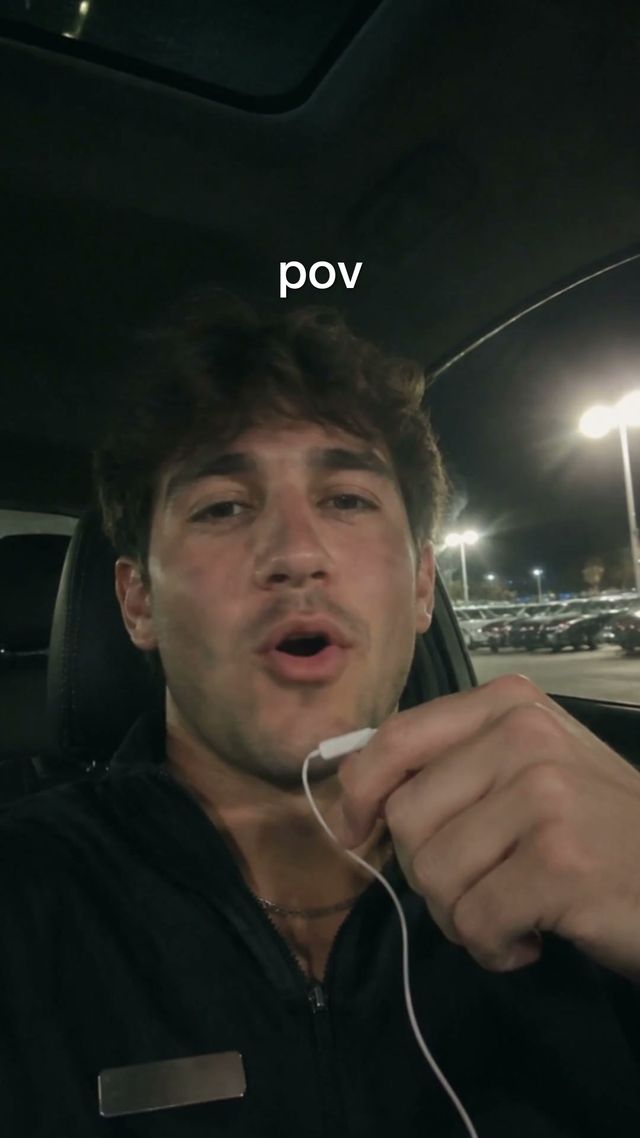
Meta has shown us 17 ads; 17 are still running, earliest from Nov 2026 12.

Meta · Video · Running for 12 days · Still running · View original ↗
The most fun way to learn salesUnpopular opinion: getting your real estate license is the easy part. Try Sales Parrot free.

Meta · Video · Running for 12 days · Still running · View original ↗
The most fun way to learn salesA single mom, a brand-new real estate license, and a deal about to fall apart over a roof. 🏡 Quick, fun sales lessons every day. Try Sales Parrot free.
 Meta · video · 12 days
 Meta · video · 12 days
 Meta · video · 12 days
 Meta · video · 12 days
 Meta · video · 12 days
 Meta · video · 12 days
 Meta · video · 12 days
 Meta · video · 12 days
These are the longest-running ads in this set. Long runs usually mean the creative is working. Data comes from the official Meta, Google and TikTok ad libraries and updates daily; open the official library to view the original creative.
Research notes: competitor table, acquisition evidence, full research report
- Competitors
Name Where Launched Scale How it differs from this one Hyperbound Web 2023(YC) 2025-09 raised $15M Series A, over $18M in total (Forbes) B2B, sold per seat to sales teams; Sales Parrot sells to individuals, as a gamified daily course Yoodli Web 2021 $40M Series B, revenue up 900% (GeekWire) Enterprise L&D platform, with no industry-specific consumer courses or streak mechanics Second Nature Web 2018 Raised $22M Series B in 2025 Custom enterprise AI practice, not sold to individuals paying out of pocket Rilla iOS 2019 iOS 853 ratings (appstore library) Records real door-to-door sales conversations and scores them, for team use; not a self-study app Roonly iOS 2026 Listed on G2/Capterra; scale unverified Also calls itself a Duolingo-style course for door-to-door and frontline industries, but sells to teams, with courses generated from the team's real data CoachCraft: AI Sales Trainer iOS 2025-04 124 ratings Consumer AI sales coach, with no industry courses or gamification, and no paid acquisition seen SalesGPT / CloserLab / Knock.AI / SalesTok / Sellify and dozens more iOS 2025–2026 Most have 0–30 ratings Similar product shape, almost none buy paid acquisition, none have taken off ChatGPT / Gemini voice mode Big-company features 2024– — You can write your own prompts to practice, but there's no course structure, scoring, or streaks Duolingo Big-company features 2012 US 5.6M ratings Has the same gamification mechanics, but no sales course - Where users come from
- Verified Meta paid acquisition (FB/IG/Audience Network): Meta Ad Library, page 1288099667729723:17 video ads running, all linking to the App Store; 11-12 started 12 ads, 11-16 added 4, 11-19 added 1. Creatives are 2-minute AI 3D animated comeback shorts (an ex-convict selling cars, a single mom as a real estate agent, a door-to-door car wash route), one per industry.
- Verified IG/FB organic warm-up: domain 10-11 registered, first IG reel posted 10-12; IG @salesparrot.ai has 927 followers; the FB page posted a "Duolingo for sales" meme
- Inferred Padded reviews: 37/54 ratings with text; only 4–5 stars; 11-18 in a single day 13; usernames look batch-generated (Grantreviewer, CobbS.rating); content is generic, many about coffee shops and small business owners
- Verified Website conversion page: salesparrot.ai lets you try a lesson directly, with a commission ROI calculator ("earn $9,000 more per year") and a row of big-brand logos (unverified)
- Inferred Search misdirection from the same-name B2B product salesparrot.com: Akintunde Opaleye's B2B lead tool shares the name; no evidence the two are related, and no evidence it drives traffic
Sales Parrot: Sales Training(iOS 6825108391)
Data as of 2026-11-20/21. Stores checked: only listed in the US store (lookups in gb/ca/au return nothing); no Google Play version (not in the googleplay library, and ai.salesparrot.app returns 404 on Play).
Verdict
It's not breaking out yet. A 6-week-old brand (domain registered only 2026-10-11 ago), 11-10 launched, peaked at #198 on the US store's Education Top Free chart. The data card shows "40 new ratings in 7 days," mostly from a burst of reviews: out of 54 ratings total as of 11-20, only 37 have text (69% text rate, where a normal app is usually 5–15%); 37 are all 4–5 stars, and 16 are deliberately 4 stars. 11-18 alone got 13 reviews in one day. The copy is hollow too, with a lot of lines like "just opened a coffee shop" and "new shop owner," which don't read like they came from the target user (salespeople). The real growth play is Meta paid acquisition that only started on 11-12: 17 video ads are running, all 2-minute, Pixar-style AI 3D animated "underdog" short dramas, each one about a different industry (car sales, real estate agents, insurance, kitchen remodeling, mobile car washes...), matching the industry-specific courses inside the app. Pricing is a high-ticket subscription at $30/month, sold on the pitch that you earn more commission the more deals you close.
What's worth studying is the playbook itself: using the hook of ReelShort-style short drama ads for an industry-specific skill-learning subscription. Whether it takes off depends on December's rating count and grossing charts.
What it is
- "Duolingo for sales": a few minutes of level-based lessons a day, with courses split by industry (4S dealership sales, auto service advisors, auto finance and insurance, dentistry, commercial real estate, home improvement, chimney cleaning, plus a general sales track). AI customer roleplay (the customer is named Brian; he haggles, stalls, and asks tricky questions), graded right after each answer, with an "Explain my mistake" button for where you went wrong. Streaks, XP, and weekly leagues, all borrowed from Duolingo. (App Store description, lookup 2026-11-20)
- Free version: a few beginner lessons a day, with AI practice limited to a few sessions a day. Pro is $30/month, unlocking all courses, unlimited AI practice, and detailed coaching; the listing mentions monthly and annual billing. (Pricing section on salesparrot.ai)
- The salesparrot.ai homepage lets you try a lesson directly: pick an answer parrot and get scored. There's also a "commission calculator": "people practicing in the beta close 3x more deals a month", at $750 commission per deal, earning $9,000 more per year (the page notes this is a "difference-in-differences analysis of the beta, 2026").
- Developer: individual account Luis Rivas, with only this one app under it; bundle id
ai.salesparrot.app, 190MB package, English only. Release cadence: 11-10, 1.0,11-14, 1.2.0. - The row of logos under "Reps practice at" on the website is Apple, J.P. Morgan, Walmart, Salesforce, LVMH, Mercedes-Benz, New York Yankees... For a product 6 weeks old, that row is most likely window dressing, unverified.
Growth data
| Date | US store rating count | Source |
|---|---|---|
| 2026-11-10 | Launched | lookup releaseDate |
| 2026-11-14 | 4 | appstore library app_day |
| 2026-11-20 | 54 (average 4.70) | iTunes lookup |
| 2026-11-21 | 44,7 days +40, #198 on Education Top Free | appstore library (data card) |
- Not on the overall chart, and not on any grossing chart. Reaching #198 on the US Education Top Free chart is a low bar.
- The review RSS pulled 37 reviews in total: 11-13 have 5, 11-16 have 8, 11-17 have 4, 11-18 have 13, 11-19 have 7; 21 are 5-star, 16 are 4-star, none are 1–3 stars.
How the ratings came about: mostly manufactured (inferred, with fairly strong evidence)
- 69% of ratings have text (37/54), an abnormally high share.
- Only 4-star and 5-star ratings, with deliberate 4-star ones mixed in, a common way bought reviews are made to "look real".
- The usernames look batch-generated:
Dorthyycomps,Grantreviewer,CobbS.rating,Stella.dapplereviews,EnchantingWebz,Dannaaap. - Generic content, much of it unrelated to sales: "Opened my coffee shop recently", "As a mom and business owner", "Just opened my business", "My team has noticed the difference".
- In timing, they cluster only after the ads started on 11-12, with 11-18 in a single day, 13.
- A few reviews read very much like the target user (
letMesellyoCardescribes the F&I setting,10shottatalks about streaks and leagues,Fatima2829mentions "Explain my mistake"), but they could also be written in-house.
So 40 ratings per week shouldn't be read as a proxy for downloads. Actual downloads may be only a few hundred to a thousand or two (pure inference).
Competitors
| Product | Where | Launched | Scale | How it differs from Sales Parrot |
|---|---|---|---|---|
| Hyperbound | Web B2B | 2023(YC) | 2025-09 raised $15M Series A, over $18M in total (Forbes) | Sold to sales teams, billed per seat, uses AI buyers to practice cold calls; Sales Parrot sells to individuals, as a gamified daily course |
| Yoodli | Web B2B | 2021 | $40M Series B, revenue up 900% (GeekWire 2025) | Enterprise L&D platform; no industry-specific consumer courses or streak mechanics |
| Second Nature | Web B2B | 2018 | Raised $22M Series B in 2025 (PRNewswire) | Custom enterprise AI practice; Sales Parrot is paid for by individuals |
| Rilla | iOS + B2B | 2019 | iOS 853 ratings (appstore library 11-06) | Records real conversations for door-to-door sales teams and scores them; not a self-study app |
| Roonly | iOS + web B2B | 2026 | On G2 and Capterra | Also calls itself "Duolingo-style courses" for door-to-door sales like roofing, solar, HVAC, and insurance, but sells to teams and generates courses from the team's real data. The closest match so far. |
| CoachCraft: AI Sales Trainer | iOS | 2025-04 | 124 ratings | A consumer-facing AI sales coach, with no industry-specific courses and no gamification |
| SalesGPT / CloserLab / Knock.AI / CloserGym / SalesTok / Sellify and dozens more | iOS | 2025–2026 | Most have 0–30 ratings (appstore library) | Also consumer-facing AI sales roleplay, and almost none of them have run paid acquisition or gained traction |
| ChatGPT / Gemini voice mode | Big-company features | — | — | You can write your own prompt and have it play a customer, but there's no course system, scoring, or streaks |
| Duolingo | Big-company features | 2012 | US 5.6M ratings | Has gamification mechanics, but no sales course |
Key point: "AI sales roleplay" is crowded in B2B, with funding rounds over $100M. On iOS consumer there are dozens too, but almost none have broken out. Sales Parrot already ranks near the top by rating count in the iOS consumer category (the ones it pushed up count too), and that comes mainly from paying for acquisition, not from the product being different.
Growth channels
- Meta paid acquisition (confirmed, main channel): The Meta ad library (pulled via Scrape Creators, page_id 1288099667729723, homepage 258 likes) has 17 ads in total, all still running, all linking to the App Store. Start dates: 11-12 have 12 entries, 11-16 have 4, 11-19 have 1. Placements: Facebook, Instagram, Audience Network.
- Creative format: I had Gemini review the "Ex-convict car salesman" ad. It runs 2 min 20 sec, uses AI-generated Pixar-style 3D animation with AI voiceover and lip sync. Plot: a former top salesman gets out of prison, the dealership gives him a 30-day trial, a customer says "I'm just looking" and stumps him, coworkers mock him, a manager recommends Sales Parrot, he practices while eating, eating lunch, and tying his tie, then closes a couple with kids using the script, gets hired full-time, and makes up with his daughter. The app UI appears for only about 12 seconds, and the parrot mascot shows up for only the last 3 seconds. CTA: "Try it free." It's basically the overseas male-audience rags-to-riches short drama formula, with the melodrama dialed down.
- The other ads use the same template with the industry swapped: "A single mom, a brand-new real estate license…" "He lost his job, his family, and Big Sal wants his money" "He fumbled the state final. Now he knocks doors…" "A line cook turned kitchen designer…" "First commission check selling cars: $412. The guy next to him sold 19". One story per industry, matching one industry course in the app.
- Note: the recall reason says "parrot meme video ads running since 10-13", which is inaccurate. When the ad library is searched including inactive ads, the earliest ad is from 11-12. The October posts are organic posts on the homepage (search results show facebook.com/61595255823038/posts/... with "My family thought I joined a pyramid scheme" and "Sales Parrot is Duolingo for sales").
- Organic IG/FB content before launch (confirmed): domain 10-11 registered, and 10-12 they posted the first IG reel ("If you're new to sales you NEED this app"); IG @salesparrot.ai has 927 followers. The content is memes and short videos, with the tagline "Duolingo for sales".
- Buying reviews to boost ratings (inferred, fairly strong evidence): See above.
- Landing page conversion: You can try a lesson right away. It adds a commission calculator and a row of big-brand logos to justify the $30/month price.
- Channels with no presence found: TikTok (a TikHub search for salesparrot only returns videos of parrots for sale, and there's no official account), X (x-radar shows 0 posts in the last 60 days), Reddit, Product Hunt, HN, media coverage, and TrustMRR: nothing.
- Name collision: salesparrot.com belongs to Akintunde Opaleye, a B2B lead generation and outreach tool (launched 2025 years ago, IG @salesparrot_ai, has a LinkedIn company page). Going by the developer name, domain, and product, the two are probably unrelated (the recall's claim of "possibly the same team" has no evidence). Searching "Sales Parrot" may bring in some misdirected traffic, and may carry trademark risk.
Why it has surfaced so far
- Paid acquisition: 17 Meta video ads, with creative added continuously since 11-12 (11-16 added 4, then 11-19 added 1 more), showing they're still willing to keep spending.
- Short-drama-style AI animation creative: A 2-minute rags-to-riches story trades for watch-through and emotion, and AI keeps production costs low enough that one person can churn out creative for each industry.
- Segmenting by industry: Commission-based frontline sales in cars, real estate, insurance, and home improvement. Corporate training platforms don't reach them, and they have a personal incentive to get better. "One extra deal pays for it" makes $30/month easy to justify.
- Buying reviews to prop up cold-start credibility: Reached 4.7 stars with 54 ratings within the first week, which makes the paid acquisition landing pages convert better.
Differentiation
- For B2B platforms: Sells to individuals, not teams. Built as gamified daily courses (streaks, leagues), not an enterprise dashboard. Courses are split by blue-collar and frontline industries.
- For consumer competitors: The product shape isn't very different (AI customer roleplay plus scoring, which everyone has). What's actually different is distribution: others almost never buy paid acquisition, while this one, from launch, mass-buys Meta with AI short-drama animation, one story per industry.
- Is differentiation the reason it surfaced?: Duolingo's mechanics are copyable by anyone. Splitting courses by industry is what makes it possible to run creative targeted at each audience. It surfaced because of its distribution playbook, not the product.
Takeaways
- For subscriptions in skill-building and career growth, you can use the overseas short-drama rags-to-riches narrative as paid acquisition creative: a down-and-out lead, getting mocked, the app, the comeback, family approval. The product appears for about 10 seconds, with a CTA at the end. AI 3D animation lets a solo team produce creative in volume.
- One industry course maps to one story creative and one interest audience, so creative, audience, and course line up on all three sides.
- For audiences whose income depends on skill (commission-based sales), an "ROI calculator" can help justify a high-priced subscription.
- A month before launch, test the tagline ("Duolingo for X") with organic posts, then start paid spend.
Still unclear
- Real downloads, retention, and payments are unknown. The ratings have been padded and can't be used as a signal of downloads. There's no bestseller-chart signal at all.
- Ad spend and reach are unknown. Meta doesn't publish spend for commercial ads, and only 5 ads show "<100 impressions," which means they're newly launched creative.
- Who's behind it is unknown. Luis Rivas has no public profile I could find. Where the "private beta" ran and its sample size are also unknown (the domain was registered only 6 weeks ago).
- The annual plan price is unknown, and whether the in-app price matches the website's $30/month is unverified.
- Whether it can expand to Android and other English-speaking markets is unknown.
Sources
- App Store lookup:itunes.apple.com/lookup?id=6825108391&country=us(2026-11-20)
- Review RSS: itunes.apple.com/us/rss/customerreviews/id=6825108391/sortBy…
- Website: salesparrot.ai (read via Jina, 2026-11-20); domain RDAP registration date 2026-10-11
- Meta ad library (Scrape Creators, page 1288099667729723,17, ads)
- IG: www.instagram.com/salesparrot.ai/, www.instagram.com/reel/Dealh4MtPXa/ (2026-10-12)
- FB organic post: www.facebook.com/61595255823038/posts/122106918021508527/
- Internal appstore library (app_day, app_snapshot, US store); googleplay library
- Hyperbound:www.forbes.com/sites/dereknewton/2025/09/15/sales-upskilling…
- Yoodli:www.geekwire.com/2025/ai-roleplay-startup-yoodli-raises-40m-…
- Second Nature:www.prnewswire.com/il/news-releases/second-nature-secures-22…
- Roonly: apps.apple.com/us/app/roonly/id6757205157, www.capterra.com/p/10040185/Roonly/
- Same-name B2B: salesparrot.com, linkedin.com/in/akinthegreat