A 17-year-old student built a "Dagestani Duolingo": one government news item plus family group chats pushed it into the top 20 of the Russian education chart within a week
What it is A free Duolingo-style app that teaches 7 Dagestani languages (Avar, Dargin, Kumyk, Lezgian, Lak, Tabasaran, Andi) with few-minute lessons, pictures, audio, level-up stages, and review.
Why it took off At the end of October the Dagestan government called for revitalizing native languages. The story "student builds a Caucasian Duolingo" was first published by regional media and was reposted by a dozen-plus outlets within a day, while family members forwarded it to relatives who want to chat in their mother tongue. Before this, these languages only had dictionaries and flashcards, with no structured course to learn from scratch.
CHow you could follow it Only suits people from a small-language community with native speakers nearby who can record and proofread. Use this template to build one for your own language, then pitch local media during news windows like a government policy or International Mother Language Day. The goal is reputation and funding, not revenue.
Est. monthly revenue (App Store) under $1KWe estimated this from its chart ranks and rating growth across storefronts, calibrated against verified revenue; typical error is 2–3x. Read it as a tier, not an exact number.
- Data (updated daily) · Launched 2026-11-11 · US store rating 18 · 11-20 Best overall Top Free rank #189 (Russia) · Charted in 11-20 10 stores
iOS · Overall Top Free rank · by store Data 2026-11-17 → 2026-11-20 (4 days, 4 observations). Lower rank is higher; gaps mean it wasn't charted that dayiOS · Number of stores charted (top 200 on any chart) Data 2026-11-17 → 2026-11-20 (4 days, 4 observations)iOS · rating count · US store Number of ratings 18Data day 2026-11-19, only 1 days so far. Apple doesn't give download counts, so rating growth is the proxy
Tiril is a free app made by 6 students aged 16 to 19 from Dagestan, using the Duolingo playbook (short lessons, pictures and audio, level paths, spaced review) to teach 7 local languages: Avar, Dargin, Kumyk, Lezgin, Lak, Tabasaran and Andi. The web version went live around Nov 8, the iOS version was listed in Nov 11, and by Nov 14 it hit #13 on the Russia store's Education Free chart. It blew up fast, but the numbers are small and it earns nothing. What's worth watching is how it spread with zero ad spend, riding a government news story and a wave of ethnic pride. This piece covers what it is, why this week, how many people actually use it, who's behind it, and whether the playbook can be copied.
A girl who left home
In 2026 Nov 12, a user in the Russian App Store gave Tiril five stars: "I've always wanted to learn Lak, my mother tongue. I kept meaning to sign up for a class but never had the time. Now I've left the republic for school and work, and I came across this app online. Thank you so much!"
The same day there was a shorter review that opened with a Dargin line, "Ккунаса барчалагь" (thank you), then wrote in Russian, "thanks for making an app like this." The next day someone pointed out a mistake: "In Kumyk we've always said тепси for table." A Dargin speaker said they speak the Akusha dialect, not standard language, and "it would be great if dialects were added." Someone else said the Lak pronunciation wasn't quite right.
By Nov 15, Tiril had only 18 ratings worldwide, all five stars (iTunes lookup). Nearly every reviewer says the same thing: I'm from this people, I can't speak my language, thank you for making this.
What it is
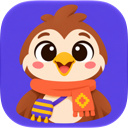
You can start learning without signing up. Each lesson takes a few minutes: first you see a new word with a picture and pronunciation, then do a few exercises (pick the translation, build the sentence, pick the word by ear, fill in the blank). Questions you get wrong come back at the end of the lesson, so every lesson can be finished. The course is a stepped path, from "first words" to "words and sentences" to "dialogue," with a test at the end of each step. Words you've learned come back after one day, three days, and a week. Lessons earn XP, the daily goal is 10 XP, streaks are tracked, and the mascot is a little eagle called Orlik.
There's also a dictionary with pronunciation (search both Russian and local languages), hard-sound guides in the alphabet, and proverbs (with audio, translations, and explanations). It works offline, with no ads and no in-app purchases.
The content isn't large. Take Avar as an example: 31 lessons across 3 stages, a dictionary with 24 topics, 438 words, and 154 sentences (Замана, 11-12). The name Tiril means "revival" in Turkic (Сапа Кавказ, 11-10). In its first week the app went from 3 languages to 7. The Nov 14 1.0.1 version added Tabasaran and fixed the Avar and Dargin audio.
Why this week
The timing came from the government. In Oct 26, the Dagestan government met and decided to set up a batch of key native-language schools, and TASS reported it. "Young people no longer speak their mother tongue" was already common knowledge locally, and this brought it back into the spotlight.
Founder Магомедрасул Меджидов is 17 years old and spent his last three years of school at a British-style school in Turkey. He told Сапа Кавказ: "It all started with a news story: the Dagestan government decided to revive the native language. The problem is real. Many young people no longer speak their own language. We thought we could help." He also said: "We're the generation that is losing our mother tongue ourselves, so Tiril is made for us, and for our younger brothers and sisters."
The story broke at noon on Nov 10 12:37 as an exclusive interview with the regional independent outlet Сапа Кавказ, headlined "Dagestani students built a Duolingo." The same day, 7x7, ИЛЧИ, Mirmol, the Telegram channel "Что там у дагестанцев?", the local Instagram account "Махачкала | Дагестан" and «Новая газета Европа» all picked it up. From 11 to 12, Поле зрения, Голос Степи, Pikabu, and Замана, part of Dagestan's official ethnic media group, followed.
It got that much pickup because the story had everything it needed: students, a mother tongue, a government push already in the news, and an easy comparison everyone understands, "Caucasus Duolingo." Regional media needed a positive example of young people taking action themselves, and this one landed right in their lap.
How many people are actually using it
| Date | Russia education Top Free | Global rating count |
|---|---|---|
| 11-13 | #27 | 0 |
| 11-14 | #13 | 1 |
| 11-15 | #18 | 14 (+13 per day) |
App Store ratings and chart data, 11-13 to 11-15. An iTunes lookup (11-15) shows 18 ratings worldwide.
It also charts in the education rankings of Azerbaijan, Armenia, and Belarus (roughly #60 to #120), which matches the diaspora of Dagestani peoples: northern Azerbaijan is home to Lezgins and Avars. Botswana, Anguilla, and the British Virgin Islands also appear, but education charts in those small storefronts can be reached with a handful of downloads, so they don't count.
The team's own numbers are much bigger: over 1,000 users on day one of the web version (Замана, 11-12). The founder, Nov 14, posted a Reel on Instagram saying "in less than 6 days, 40,000+ people, the servers got crushed." No third party can verify this, and it doesn't say whether these were visitors, sign-ups or installs. It mostly counts the web version. Based on the iOS rating count of 18, real App installs are probably in the thousands (my inference).
Where users come from
- Media pickup. Everything in the list above was written by outlets on their own initiative. I see no evidence of paid acquisition.
- The founder's own Instagram. @medzhidov.m1 (4,853 followers) has posted a Reel almost every day since Nov 8, alongside the official @tiril.app (2,404 followers): launch teasers, "it's on the App Store now, search Tiril," "6 days, 40k people." There's no Tiril content on TikTok, and nobody is discussing it on X.
- Family groups. Every post says things like "send it to people who want to chat in their mother tongue" and "send it to relatives and friends, it means a lot to us." Dagestani family and community networks are tight, and a link circulating in WhatsApp and Telegram groups costs nothing. How much this drove is impossible to measure, but a comment saying "saw it online" and a wall of "thank you" messages suggest this is the path (inference).
- Web first, then into the app. The web version opened first to build an audience, and once the App went live, that audience was told to search for the name in the store. The first iOS ratings and chart positions most likely came from this group.
It's more than a few students
The students have backing. The founder says he "went through Tooba's accelerator" and publicly thanked Ramazan Medzhidov and Timur Sharapudinov for "supporting and helping us from the start." Tooba is a charity crowdfunding app from Dagestan that calls itself the largest in Russia; those two are its founder and CTO. The Tiril developer account on the App Store belongs to Timur Sharapudinov himself.
There are two more coincidences: the founder shares a surname with Tooba's founder, Medzhidov, and in Замана's coverage another developer, Akhmad Sharapudinov, shares a surname with Tooba's CTO. I haven't checked whether they're related. What's clear is that behind the launch, the tech, and the media framing stands an experienced Dagestani internet team. That several students could get the web version and iOS app live within a couple of weeks is key.
Why nobody did it well before
Dagestani language apps have existed, but almost all were dictionaries or flashcards and haven't been updated in years:
| Product | What it is | Scale (iOS ratings) | Status |
|---|---|---|---|
| Родной Язык(Foundarium) | Short multi-ethnic mother-tongue courses, focused on Ossetian and Abkhaz | 440 | Dagestani languages listed as "coming soon" for years, no updates since 2024-07 |
| Avdan | Children's flashcards with voiceover | 86 | No updates in 2023 years |
| Дагестанский словарь | Dictionary, claims 350k words | 43 | No updates in 2021 years |
| Школа Лезгинского языка | Lezgian practice exercises, paid subscription | 42 | No updates in 2019 years |
| Avar.me, Tilim | Avar and Kumyk dictionaries | 3, 8 | Newly launched in 2026, a tool rather than a course |
iTunes lookup / search, Russian store, 11-15.
Google Translate added Avar in June 2024, but it only translates, it doesn't teach. Duolingo covers no Caucasian minority languages. Foundarium, the closest match to Tiril, said years ago it would build Avar, Dargin, and Lezgian, and never shipped. So a course where you can learn from zero, like a game, is an open space for this audience.
Demand has been proven elsewhere too: Tatar app Chamala launched in 2024, has 133 iOS ratings, and claims 35k installs. Around the same time, someone independently built a Lezgian learning app, and Nov 3 posted a TikTok asking people to share it: 11k views, 1,483 likes, earlier than Tiril's news coverage.
Where the money comes from: none
Tiril is entirely free, with no ads and no in-app purchases, and it has never said how it plans to make money. The team's play looks like public service and reputation: a 17-year-old founder who is also building a "goal gamification" app and other "AI products" is accumulating a track record and an audience. If money comes later, the likely routes are donations (Tooba already does this), government or foundation grants, and school purchases (inference).
The costs are real, though. 7 languages means every word and sentence has to be recorded and checked by native speakers. Reviews have people correcting Kumyk word choice, saying Lak pronunciation is off, and asking for dialects, and every one of those has to be fixed by finding someone to do it. The courses are also short: the Avar course is 31 lessons, and serious learners can finish in a few weeks. How many stick around is impossible to tell right now.
If it were you
C. You can learn a very cheap distribution playbook here, but copying it isn't worth it. The Dagestani niche is already taken and handled well. For a different ethnic group, the money basically wouldn't come in, and the things that made this take off (the speakers' own identity, native-speaker voiceovers, regional media willing to cover it, a team backing it like Tooba) are not available to an outside developer.
Who it fits: someone from a minority-language community who can build apps, with native speakers at home or nearby who will record and proofread. The goal is reputation, a track record, and social impact, or access to grants and school partnerships, not a living. Within Russia, languages that are still empty or poorly served include Chechen, Ingush, Kabardian, Bashkir, Chuvash, Buryat, and Yakut. Outside Russia, any regional language that "young people don't speak and the government is promoting" follows the same template (inference).
Who it doesn't fit: anyone who wants to make money from it (users come for the cause, and charging will get you yelled at, and ads and in-app purchases are out too); anyone without a connection to the community (without the identity, the story doesn't land, and media won't cover it); anyone who can't produce the content (the courses are recorded line by line by native speakers, and without them you can't build it).
How to build it: start with the web version, keep the content small and polished, and get 20 to 30 lessons of one language solid first, with voiceovers from native speakers. Follow Duolingo's structure: short lessons, illustrated and voiced, mistakes revisited at the end of a lesson, spaced review, daily goals and streaks, and one mascot. Make it work offline and skip the sign-up. After launch, treat the comments section as your proofreaders. Fixes come fast, and people will keep pointing out errors if they see them getting fixed.
How to get users: wait for a news hook or pick a date. When a local government announces a mother-tongue policy or schools change their curriculum, pitch regional media and big local Telegram and Instagram accounts with the story "our generation is losing its mother tongue." Write every post as "send it to people who want to chat in their mother tongue." Build the audience on the web first, then on App launch day, tell them to search for the name in the store, and push for the education category chart. Education charts in countries where the language is spoken have low thresholds.
Deadline: there's no commercial window, but there is a news window. The next ready-made date is International Mother Language Day, Feb 21 2027, when regional media most need stories like this. To make it, you'd need a working version by the end of January.
Where I could be wrong: ① By mid-December, Tiril's iOS rating hadn't reached 50 and it had dropped out of the top 100 in Russia's free education chart, which suggests this kind of buzz fades within a week of the news, and copying the model for another ethnic group would get you about a week of attention. ② Similar apps for other ethnic groups have launched without regional media covering them, which suggests that what spread this was the government news hook, not the template. ③ On the other hand, if Tiril gets a government contract, school purchases, or foundation money, that would show these products can survive without charging users, and that's worth taking seriously.
Research notes: competitor table, acquisition evidence, full research report
- Competitors
Name Where Launched Scale How it differs from this one Родной Язык: понимай и говори(Foundarium) iOS 2023-12 iOS 440 ratings (ru); also on Play / RuStore Same multi-ethnic mother-tongue short courses, but focused on Ossetian, Abkhaz, and other languages. The Dagestani languages were listed as "coming soon" and haven't been updated since 2024-07. Tiril is built by locals and has 7 Dagestani languages already live. Avdan: Карточки Родных Языков iOS 2022-01 iOS #86 ratings Children's flashcards with voiceover, no course path, no updates after 2023 Дагестанский словарь(Imran Guseynov) iOS 2021-11 iOS 43 ratings; claims 350k words Pure dictionary, no teaching, no updates since 2021 Avar.me iOS 2026-06 3 ratings Offline Avar dictionary, a tool rather than a course Tilim — кумыкский словарь iOS 2026-03 8 ratings Kumyk dictionary plus book library, single language Школа Лезгинского языка iOS 2018-09 42 ratings Lezgian practice exercises, paid subscription, no updates since 2019 avarmaz.ru / dagolingo.ru Web Not verified Not verified Free Avar online lessons / paid one-on-one tutoring, no mobile gamification Google Translate (2024-06 added Avar, Chechen, and other languages) Big-company features 2024-06 — Translation only, no learning; Duolingo covers no Caucasian minority languages Chamala (Tatar) iOS 2024-01 iOS 133 ratings, claims 35k installs The same template in other republics. Not a direct competitor, but it shows the demand is real. - Where users come from
- Verified Regional media picked it up on their own: Сапа Кавказ broke it as an exclusive on 11-10 (website plus about 11.5k Telegram subscribers and Instagram). The same day, 7x7, ИЛЧИ, Mirmol, TG "Что там у дагестанцев?", Instagram "Махачкала | Дагестан", and «Новая газета Европа» reposted it. From 11-11 to 11-12, Поле зрения, Голос Степи, Pikabu, and Замана followed.
- Verified Founder and official-account Instagram Reels: @medzhidov.m1 (4,853 followers) has posted a Reel almost every day since 11-08; @tiril.app has 2,404 followers. Users are directed to search for Tiril on the App Store.
- Inference Word of mouth through families and communities: posts uniformly call on people to "send it to people who want to chat in their mother tongue" and "send it to relatives and friends"; the only comment on record thanks them in Dargin; a few charting placements in Azerbaijan, Armenia, and Belarus.
- Verified Web first, then users are pushed into the app: tiril.ru went up about 11-08 first, and after the iOS launch on 11-11, web users were directed to search for it in the store.
- Inference Tooba's resources: the developer account belongs to Timur Sharapudinov, Tooba's co-founder and CTO; the founder says he went through Tooba's accelerator; I found no evidence of Tooba's official accounts promoting it.
- Inference Paid acquisition: no evidence found. The app is free, has no in-app purchases, and has no obvious path to recovering costs.
Tiril: родные языки (ios_6833473139) research report
Bottom line first
Tiril is a free app built by 6 Dagestani students aged 16–19. It applies the Duolingo model (short lessons, illustrations and voiceovers, level progression, spaced review, and a mascot, the eaglet "Орлик") to teach Dagestani local languages (Avar, Kumyk, Andi, Lezgian, Lak, Dargin, Tabasaran). The web version tiril.ru went up around 2026-11-08, followed by the iOS launch on 11-11.
Three things drove its growth, and they worked together:
- Timing: in late October 2026, the Dagestan government publicly announced a push to "revive mother tongues" (a government meeting 10-26 approved a network of schools focused on mother-tongue teaching, as reported by TASS). The team itself says the news is what prompted them to build this. "Young people no longer speak their mother tongue" is already a local social consensus, and it happened to be in public discussion at that moment.
- The story spreads on its own: the headline "Students built a Caucasus Duolingo" got an exclusive from the regional independent outlet "Sapa Kavkaz" 11-10, and the same day it was picked up by 7x7, ILCHI, Mirmol, the Telegram channel "Что там у дагестанцев?" ("What's going on with the Dagestanis?"), the local Instagram account "Makhachkala | Dagestan", and "Novaya Gazeta Europe". 11-11 and then 11-12 official national media group outlets, Zamana and Pikabu, followed. No paid acquisition in sight.
- The product actually works, and nobody has done this category well before: until now, Dagestani language apps were almost all dictionaries or flashcards that hadn't been updated in years. A course-style product where you can start learning right away, game-like, was a blank space for this audience. Users came in with the feeling of "doing something for my family and my people," and the founder's line is "send this to people you want to talk to in your mother tongue," so sharing costs nothing.
There's also a resource layer behind it: the team "came through the Tooba accelerator." Tooba is Russia's largest charity crowdfunding app, founded by people from Dagestan. The iOS developer account belongs to Timur Sharapudinov, Tooba's co-founder and CTO. Founder Magomedrasul Medzhidov, 17, publicly thanked Tooba founder Ramazan Medzhidov and Sharapudinov. So it isn't purely grassroots: tech, app store listing, and media framing are all backed by an established Dagestani internet team.
Get the scale straight: iOS has only 14–18 ratings (11-15), and its best rank in the Russia Education Top Free chart was #13. The "6 days, 40k+ people" figure is the team's own claim on Instagram, and it mostly counts the web version.
1. Data
| Date | Russia education Top Free | Russia ratings count | Other charted stores (Education, Free) |
|---|---|---|---|
| 2026-11-13 | 27 | 0 | vg 34, ai 68, az 96, am 114, by 126, bw 142, is 164 |
| 2026-11-14 | 13 | 1 | bw 9, ai 15, am 60, vg 62, az 63, by 71 |
| 2026-11-15 | 18 | 13(+12) | ai 13, bw 36, by 70, am 72, vg 83, az 90, ee 172 |
Source: App Store library app_day, 2026-11-13 to 11-15. iTunes lookup (around 11-15) shows 18 ratings globally, average 5.0, version 1.0.1, Russian-only interface, free, no in-app purchases.
- The only review I could pull (11-12, ru, 5 stars): "Ккунаса барчалагь / Спасибо, что сделали такое приложение!" The opening is "thank you" in Dargin, which shows the praise is driven by ethnic sentiment.
- Azerbaijan (az), Armenia (am), and Belarus (by) charted, which matches diaspora Dagestanis (the Lezgin and Avar communities already live in northern Azerbaijan). The education charts in small storefronts like bw, ai, vg, and is have very low thresholds, so a few downloads can chart. Don't treat them as a signal.
- Self-reported: web version "first-day 1000+ users" (Замана 11-12, via Mirmol); "less than 6 days, 40,000+ people, the servers got crushed" (founder @medzhidov.m1 11-14's Instagram Reel, www.instagram.com/reel/Dft6S6zxRxR/). No third party can verify this.
- Content volume (Zamana): 31 Avar course lessons across 3 stages; a dictionary with 24 topics, including 438 Avar words and 154 sentences alone; plus proverbs (audio with explanations) and tongue twisters.
II. Competitors
In the Dagestani language niche, there is no course-style product with ongoing updates and some scale, and that alone is an important finding.
| Product | Where | Launched | Scale | How it differs from Tiril |
|---|---|---|---|---|
| Родной Язык: понимай и говори(Foundarium) | iOS / Play / RuStore | 2023-12 | iOS 440 ratings (ru) | The closest match: also a multi-ethnic mother-tongue app with short lessons and gamification, but focused on Ossetian, Abkhaz, Mingrelian, Tatar, and Armenian. Avar, Dargin, Kumyk, Lezgin, and Lak have been "coming soon" for a long time, and the last iOS update was 2024-07. In effect, that gap was left for Tiril. |
| Avdan: Карточки Родных Языков(Magomed Magomedov) | iOS | 2022-01 | iOS 86 ratings; TikTok recommendation videos for 2022 years | Child-oriented flashcards with voiceover, covering Dargin, Kubachi, Ketag, and others. No course path, and no updates since 2023-10. |
| Дагестанский словарь(Imran Guseynov) | iOS / Play | 2021-11 | iOS 43 ratings; claims 350k words | Dictionaries only (Lezgin, Avar, Lak, Kumyk), no updates since 2021. |
| Avar.me(Rasul Osmanov) | iOS | 2026-06 | 3 ratings | Offline Avar-Russian dictionary, 60k entries. It's a tool, not a course. |
| Tilim — кумыкский словарь(Arkt Labs) | iOS | 2026-03 | 8 ratings | Kumyk dictionary and book library with translation, single language. |
| Школа Лезгинского языка(Rustam Amirhanov) | iOS | 2018-09 | 42 ratings | Lezgin language exercises with a subscription, no updates since 2019. |
| Авар / Лезги Клавиатура (Kamran Tadzjibov, a Dagestani living in the US) | iOS | 2022-12 / 2026-09 | 68 / 27 ratings | Input method, doesn't teach the language. |
| avarmaz.ru, dagolingo.ru | Web | Not verified | Not verified | avarmaz is free Avar online lessons (grammar, dictionary, exercises); dagolingo is paid classes with live teachers. |
| Google Translate | Big-company features | 2024-06 newly added Avar, Chechen, Ossetian, and Abkhaz. | — | Translation only, no learning. Duolingo has no Caucasian minority languages at all. |
| Chamala (Tatar) | iOS | 2024-01 | iOS 133 ratings, claims 35k installs. | The same template used in other republics shows that a "Duolingo for minority languages" has demand across Russia's ethnic groups. Not direct competitors. |
| Parallel project: a Lezgin learning app (TikTok @gulhanummm). | In development | 2026-11-03 posted on TikTok asking for shares. | 11k views, 1,483 likes | It was covered before Tiril, and emerged independently at the same time, so it's not a copy. |
Sources: iTunes lookup / search (ru, 2026-11-15); App Store library app_name; TikHub TikTok search.
III. Growth levers (where users come from)
- Media coverage (confirmed): 11-10 12:37 Sapa Kavkaz ran an exclusive interview on its site (https://sapa.media/exclusives/studenty-iz-dagestana-sozdali-analog-duolingo-dlya-izucheniya-rodnyh-yazykov/), posted to Telegram (t.me/sapakavkaz/8314, channel with about 11.5k subscribers) and an Instagram Reel the same day. Same day, 7x7 Gorizontalnaya Rossiya, ILChI, Mirmol, the TG channel "Chto tam u dagestantsev?", the Instagram account "Makhachkala | Dagestan", and Novaya Gazeta Europe (Instagram plus Facebook) reposted it; 11-11 Pole Zreniya, Golos Stepi and Pikabu followed; 11-12 Zamana (the Dagestani ethnic media group) reposted it. The headline was uniformly "Caucasus / Dagestan version of Duolingo", and that comparison is itself the hook that drives the spread.
- Founder makes the content (confirmed): @medzhidov.m1 (4,853 followers) has posted almost a Reel a day since 11-08, coordinating with @tiril.app (2,404 followers): launch teasers, "now on the App Store, search Tiril," and "6 days, 40k people." I found no Tiril content on TikTok, and nothing on X (x-radar: 30 posts in 0 days).
- Word of mouth / family sharing (CTA confirmed, effect is inferred): every post calls on people to "send this to whoever you want to speak your mother tongue with" and "send it to relatives and friends, it's a huge support for us." The target audience is Dagestanis, whose family and community networks are tight. Sharing in WhatsApp and Telegram groups costs nothing.
- The web version went live first, then users were funneled into the app (confirmed): the web version opened first to build followers and users, and once the app went live, users were told to search "Tiril" in the store. The first iOS ratings and rankings most likely came from these early web users.
- Tooba's resources (relationship confirmed, whether it cross-promoted is unverified): the developer account belongs to Tooba CTO Timur Sharapudinov himself (the same account also has Lyumeks, another gamified product from the founder). Tooba claims millions of users and has large Instagram accounts, but I found no evidence that Tooba's official accounts promoted Tiril.
- Paid acquisition: no evidence found. The app is entirely free with no in-app purchases and no obvious path to recouping spend, so I judge there was none.
Four: Why users come now, and why they stay
- Why now: at the end of October the government put mother-tongue revival on the agenda, and local media needed positive stories about young people doing it themselves. In the Sapa interview the founder says directly that "it all started with the news that the government decided to revive mother tongues."
- Where users came from: regional media, plus Instagram, plus family sharing; web first, then iOS. Diaspora users followed (charts in az, am, and by).
- Why people stay: not clear yet. Positive signals: the team says it is adjusting voiceovers and adding languages based on feedback (from 3 languages to 7 within a week of launch). Risks: content volume is small (31 Avar lessons, 438 words), so people finish quickly, and with 7 languages, each one needs native speakers to record and check its voiceovers and content line by line.
- Why people would pay: they don't. It's entirely free and there's no talk of monetization. The motivation looks more like public service and personal branding (a founder who is 17 and building an "AI product" personal brand), plus the social influence of the Tooba ecosystem.
5. Differentiation
- Compared with dictionary and flashcard apps (Avdan, Dagestani Dictionary, Avar.me, Tilim), Tiril is a course you can start from zero, with a learning path, review, and quiz cards, and one app covers 7 Dagestani languages, so family members from different ethnic groups can all use it.
- Compared with the closest one, Foundarium's "Rodnoy Yazyk": Foundarium wanted to build Dagestani languages for a long time but never did. Tiril is made by locals, voiced by locals, puts the identity narrative of "our generation is losing its mother tongue" front and center, and iterates fast.
- Compared with Google Translate: translation is a tool, Tiril is about learning and identity.
Is the differentiation why it took off? Half of it. The identity of "a Duolingo made by local students" matters more than the features. What really got it going is that the story (students, mother tongue, government agenda) happened to match what media needed; the product's job was to make people who clicked in feel it "actually works and looks decent," so they'd forward it to relatives. The feature difference (course vs. dictionary) is the entry ticket, not the engine.
6. How many people know about it
Word is spreading in small circles: regional outlets in Dagestan and the North Caucasus and independent Russian media ran it on Instagram, and nobody outside Russian-language media covered it. No revenue to disclose (it's free), 0 discussions on X, and no content on TikTok. I didn't see anyone copying it; a Lezgin-language app that emerged independently at the same time exists (TikTok @gulhanummm, 11-03).
VII. What others can borrow
- The "minority / endangered language Duolingo" template: small content volume means a usable version in 1–2 months; users' identity sentiment drives sharing; add government mother-tongue policy and regional media almost always covers it. The template could be copied to Chechen, Ingush, Kabardian, Bashkir, Chuvash, Buryat, Yakut, and more (Chamala and Iron now already show demand for Tatar and Ossetian).
- Launch the web version first to build a following, then tell users to search the store when the app goes live. That's how the first ratings and rankings for a new app come in.
- Family-focused sharing calls like "send this to whoever you want to speak your mother tongue with."
- Be clear about the weaknesses too: monetization is hard (most likely donations, government or foundation funding, school purchases), each language needs native-speaker voice work and review, and that's a real cost.
VIII. Unknowns
- "6 days, 40k+ people" is the team's own claim with unclear definitions (web visitors, signups, or installs). Third parties can't verify it. iOS has only 18 ratings, so real installs are likely in the thousands (inferred).
- Retention and lesson completion rates are unknown. The Android version isn't out yet (the team says "soon").
- Whether it's drawing on Tooba's traffic and funding, and whether it will later be folded into the Tooba system or take government projects, is unverified.
- I couldn't get view counts for accounts like "Makhachkala | Dagestan". Sapa's Telegram post has only 11 likes and 8 hearts, so spread is mainly on Instagram and through reposts.
Sources
- Data card and App Store library app_day (2026-11-13 to 11-15); iTunes lookup / search (ru)
- Sapa Kavkaz exclusive (2026-11-10): sapa.media/exclusives/studenty-iz-dagestana-sozdali-analog-d… ; Telegram t.me/sapakavkaz/8314
- 7x7(2026-11-10):www.semnasem.org/news/2026/11/10/studenty-iz-dagestana-zapus…
- Замана(2026-11-12):zamana.info/news/shkolniki-iz-dagestana-sozdali-platformu-ti…
- Поле зрения(2026-11-11):polezrenia.info/2026/11/11/uroki-avarskogo-yazyka/
- ILCHI: ilchi.info/news/dagestanskie-yazyki-mozhno-uchit-v-forme-igr… ; TVGram 「Что там у дагестанцев?」: tvgram.ru/dagestanRD/76711 ; Pikabu: pikabu.ru/story/studentyi_iz_dagestana_sozdali_onlaynprilozh…
- Instagram: @tiril.app www.instagram.com/tiril.app/ ; founder 「40,000+」Reel www.instagram.com/reel/Dft6S6zxRxR/ ; 「Now on App Store」Reel www.instagram.com/reel/DfpaydPxYKD/ ; «Новая газета Европа» www.instagram.com/reel/Dfj2L9vuPAi/ ; Makhachkala | Dagestan www.instagram.com/reel/Dfjn1KXoehC/
- Government native-language agenda: TASS (2026-10-26) tass.ru/obschestvo/28255083
- Tooba and Sharapudinov: ru.wikipedia.org/wiki/Tooba ; ae.linkedin.com/in/sharapudinov
- Google Translate adds Avar and more: oc-media.org/abkhaz-avar-chechen-and-ossetian-hit-google-tra…
- TikTok: TikHub search 「приложение аварский язык」 「tiril」 (2026-11-15)