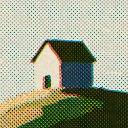
A tweet with 24.9M views: the tone of "printing" photos on paper, and five unused knockoffs
What it is A photo and illustration editor that turns images into risograph (Riso) print looks in one tap: halftone dots, overprinting, misregistration, paper texture. The basics are free, and a ¥500 one-time purchase unlocks more.
Why it took off The developer posted a launch tweet with four before-and-after images on Japanese X. The default effect looked good enough that illustrators and designers reshared and remixed it, which led to X trends, App Store charts and Japanese media coverage. No paid acquisition was involved.
CHow you could follow it Don't build another Riso app. Pick a physical print craft that has its own enthusiast community (cyanotype, thermal receipts, screen printing, photocopier art), tune the default output so it looks good on first look, and launch with a before-and-after post in the creator circle you already belong to.
- Data (updated daily) · first launch 2026-08-22 · 11-07 installs 17,976
Android · Total installs worldwide Data 2026-10-29 → 2026-11-07 (10 days, 10 observations). Google's detail page only refreshes install counts every other day, so a flat day doesn't mean nobody installed.Android · Ratings count (cumulative) Data 2026-10-29 → 2026-11-07 (10 days, 10 observations)
A small Tokyo company split a filter out of its diary app and made it a standalone photo editor. Its launch tweet got 14 million views in a day and hit #2 on the Japan App Store overall free chart. A month later, at least five copycat apps had launched (some copied the name and subtitle word for word), and none has more than 2 ratings today. This article covers what it is, why it was this one, where the money came from, why the copycats failed, and where to start if you want to build a visual tool that can go viral on a single image.
Jul 22, 9:30 PM tweet
2026 Jul 22, 9:29 PM Tokyo time, a developer named kazu. (@pnly_tar) posted on X: "リリースしました!紙に印刷したような風合いになる写真加工アプリです。" (Released! A photo editor that gives images the texture of printed paper.) It came with four example images: two-color halftone dots, slight misregistration between two ink layers, and visible paper grain, like a zine page or a small risograph poster.
He had only a few thousand followers at the time. X's own trends page recorded the post passing 24M views within 14 hours. As of today it sits at 24.9M views, 97k likes, 23k reposts and 105k bookmarks (X page, 11-06).
Four minutes later he added: "ちょっと使い方難しいかもしれないので、説明書きも作ったよ" (It might be a bit hard to use, so I made an instruction image). That post also got 548k views.
The next day, X opened a trends page for it titled "レトロ印刷風アプリ『tone』がクリエイターに大好評" (the retro-print app 'tone' is a big hit with creators). Illustrator Fuyusuke posted their processed image: "ちょっと可愛すぎて困りますよコレは" (This is a bit too cute, it's a problem). CG artist Mikan actually printed a processed piece: "かわいすぎる!" (Too cute!). Illustrator Hinofu said it "pairs really well with illustrations that have no main line."
What it is
tone turns a photo or illustration into the look of 1 to 3 color risograph printing: halftone dots, layered ink, slight misregistration, and five paper textures. Beginners can hit the "random" button over and over, and it picks ink colors automatically from the photo. Experienced users can adjust dot size, angle and density for each color separately, or export color-separation files with bleed and crop marks to print for real.
All processing happens on the phone, and photos are not uploaded. Exported images can be used commercially. The basics are free. More than 7 ink colors, saving custom presets, and 2× / 3× high-res export are sold as a one-time in-app purchase called "Ink Set 02" for ¥500 in the Japan store (KAI-YOU and note reviews; Google Play lists $3.19). There is no subscription and no ads.
It was made by Shikaya Co., Ltd. (株式会社四時半), a small Tokyo company that makes small apps and eyewear. The App Store seller name is Shikaka, Inc. (presumed to be the same company). According to the developer's own press release, tone started as one visual style inside their diary app "帳(とばり)" before they split it out as a standalone product.
Why this one: the idea isn't new
Halftone filters have existed for over a decade. Real Halftone, HalftonePix and Popdot on the App Store are 2013 to 2022 years old with dozens of ratings each. People who make real Riso prints use the desktop software Spectrolite for color separation, and Photoshop, Procreate and Canva can all produce halftone effects. More painfully, an iOS app called Pressed: Risograph & Halftone launched 6-30 three weeks before tone and did the same thing, and it has 2 US ratings to this day.
So tone didn't win by having the feature. It won on three things:
- Good-looking by default. The Riso texture has been one of the most popular aesthetics in zines and illustration circles in recent years, but until now you either had to know color separation or stack multiple layers in Photoshop. tone's default palette is soft, and each tap of the random button yields something that looks finished. The screenshot is the ad.
- Shown to the right people. Illustrators and designers on Japanese X are some of the most eager image-sharers, and the author was part of that circle. The four images in the launch post were reshared 23k times, and then illustrators processed their own work and posted it. Every output carries a recognizable "tone look."
- No friction to share. Free, commercially usable, no uploads, no subscription. An illustrator can process their own work and post it without worrying about rights, and without hitting a paywall.
Where users come from
Almost all the traffic was organic. No evidence of paid acquisition turned up (not finding it doesn't mean it didn't happen). The sequence was:
- Launch post (7-22): 24M views in 14 hours, on X's trends page.
- App Store charts: #2 overall free in Japan, #1 in Graphics & Design; Apple Japan also wrote an editorial feature story about it.
- Media: 8-26 published a PR Times press release (130k iOS installs cumulative, Android version launched). It was picked up by Real Sound Tech, AppBank, livedoor and niconico News, and many individual reviews appeared on note.
- Overseas: according to the press release, overseas creators made introduction videos on their own. Author 10-18's pinned English post "My apps" got 638K views and 16K likes. The app's English name was changed to a descriptive one: "tone - photos, printed". Since 10-28, the iOS version has charted in the category charts of 77 countries and regions: #4 in Ukraine and Brunei, #6 in Hong Kong, #11 in Taiwan, and at best #121 in the US store.
The peak ran from late July into August, mainly on iOS. The Android version caught the wave in 25 August, and it's a long tail: Google Play installs 10-29 16,579,11-06 17,976, under 900 a week, charting only in the Japan Art & Design free chart, best #79. The iOS version 10-30 is still being updated (2.1 release, adding batch imposition for print separations), and it's back to #12 on the Japan Graphics & Design chart, #11-04.
Where the money comes from: not much
Revenue isn't public. Rough math: 130k iOS plus 18k Android installs; a one-time in-app purchase usually converts only a few percent of users, so at 2%~5% that's about 3000~7500 purchases at ¥500 each. After store cuts, cumulative revenue lands around ¥100M~¥2.6M, roughly $10K–20K (est.).
That's decent pocket money for a small company, not enough to live on. The author seems to know it too: the roadmap in the press release lists "stacking text as one print layer," "multi-image compositing," and "animated GIFs," and the last item is "printing the work on paper and T-shirts." The money may sit in that physical printing step, which hasn't shipped yet.
Who's competing: five clones, under ten reviews combined
Three to five weeks after tone took off, a batch of copycats appeared on the App Store, some copying the name and subtitle wholesale:
| Name | Launched | How they copied it | Now |
|---|---|---|---|
| Print Lab: Riso Photo FX | 8-12 | Same concept | 0 ratings |
| Press Paper | 8-17 | Subtitle "Photos, printed in halftone," copying the English name | 0 ratings |
| tone+(EMOTIONFLOW LLC) | 8-18 | Named tone+, with copy reading "no ads, all free," aimed at tone's paid features | 2 ratings in the Japan store |
| PRINT DOT | 8-24 | 8 halftone patterns + 11 colors, a longer feature list | 1 ratings |
| Tone Cam — Printed Photos | 8-25 | Borrowed the name, copied the subtitle, added a live camera, and also shipped on Android | US: 0 ratings |
Sources: App Store pages and iTunes lookup, 11-06.
The ones with more features, all-free pricing, or closer names didn't take off. Pressed, which launched three weeks earlier, didn't either. For this kind of product, what decides it isn't the feature list. It's two things: whether it looks good at first glance, and who sees the first post. The copycats had neither.
Can you ride it?
Building another Riso photo-editing app to ride tone is a long shot. The original already owns the name, the aesthetic, and the memory in Japan's X creator circles, its English version is live in 77 stores, and five precedents are sitting right there.
What you can actually take is its playbook: run it again with a different texture and a different community:
- Change the texture. tone's core is "simulate a real physical process" (plates, ink, paper, misregistration), not "add a filter layer." The same approach carries over to cyanotype, thermal receipts, screen printing, letterpress, photocopiers, faded Polaroids, embroidery, and knit patterns. Each has its own hobbyist community, and each is the kind of thing where one image proves whether it works.
- Change the community. tone blew up in Japan's X illustrator circles. The Western Tumblr and Instagram illustration scenes, Korea's X fan-art scene, and China's Xiaohongshu journaling and zine scenes each have their own taste. Someone who already has a place in those circles can post a four-image before-and-after thread at almost no cost.
- The hard part is taste. The code for an app like this is small (tone processes everything on-device, no server). What's hard is making the default output look good at first glance, and being inside the community yourself.
If it were you
C: worth learning from, not worth chasing. tone proved that "a good-looking visual tool + the right tweet" can reach hundreds of thousands of installs with zero paid acquisition. But the money is modest (est. $10K–20K cumulative), the original lane is now occupied by tone and five clones, and the taste and community position that decide success can't be copied quickly. Worth doing as a cheap experiment, not as a business.
- Good fit for: indie devs who are designers or illustrators themselves and have some standing in a creative community; people who have done image processing (Metal / WebGL / Core Image) and can tune an effect to look good by default within a week or two; people who want it as a portfolio and audience-building piece and don't expect it to pay the bills.
- Bad fit for: people trying to win tone's users with more features and free pricing (the five August clones did exactly that); people who outsource the taste and have no account in the target community; people who need stable monthly revenue. A one-time ¥500 purchase won't support one person.
- How to build it: pick a physical process tone didn't cover that has a hobbyist following (cyanotype, thermal receipt, screen print, and photocopier all work), build for mobile only with on-device processing; spend the most time on default settings and add a "randomize" button; allow commercial use of outputs; free base, one-time purchase to unlock more colors and HD export, no subscription.
- How to get users: the launch is a single post with four before-and-after images, followed by a how-to diagram. Post it in your own community, not on product launch sites. After launch, actively repost users' work. Once it takes off, add a press release and an English name in descriptive form (like "photos, printed") to catch App Store search.
- When to move: there's no hard deadline. The print-texture aesthetic is still alive, but the novelty of phone photo editing fades fast. If you do it, aim to ship in the first half of 2027, before big platforms bake this look in as a built-in filter.
- What would mean I got it wrong: (1) tone's roadmap (physical printing on paper and T-shirts) ships and clearly earns money. That would mean the money is in the physical step, so this category is more than "learning" and the grade should go up. (2) Someone uses a different process with the same posting playbook and reaches million-view threads and top chart positions. That would mean the playbook is repeatable, so the grade should go up. (3) Canva, Instagram, or the iOS Photos app ships a built-in Riso or print-texture filter. Then the room for a standalone app in this category is effectively closed.
Data and sources
- Launch post, how-to post, and pinned English post on X (x.com/pnly_tar), read via 11-06; 24 hours and 14M views came from X's trending page "Retro print-style app 'tone' is a big hit with creators" (7-23).
- iOS 130k installs, #2 on the free overall chart, #1 in Graphics & Design, Android version 8-25 launch, roadmap, developer interview: PR Times 2026-08-26, company statement.
- Pricing and features: App Store Japan page (2.1 version, 10-30 update), KAI-YOU, and a personal review on note.
- Google Play installs and charts: Google Play, daily data from 10-29 to 11-06.
- iOS category charts by country: App Store charts, 10-28 to 11-06.
- Copycat apps: App Store pages and iTunes lookup, 11-06.
- Revenue is estimated; whether they ran paid acquisition is not fully verified.
Research notes: competitor table, acquisition evidence, full research report
- Competitors
Name Where Launched Scale How it differs from this one Spectrolite(ANEMONE) Other About 2020 The standard desktop tool for the Riso print scene A production tool that makes print-ready color-separated PDFs for real Riso printing; tone is a one-tap finished result on your phone Photoshop/Procreate/Canva halftone filters, effect.app Riso presets Big-company features Already around Huge Multi-step workflow, requires knowing the software, no integrated multi-color halftone + misregistration + paper texture + randomization Pressed: Risograph & Halftone iOS 2026-06-30 US rating 2 Same concept launched earlier but had no distribution, almost nobody uses it Older halftone apps such as Real Halftone 2, HalftonePix, Popdot iOS 2013-2022 Tens of ratings Single halftone filter, no multi-color overprint or paper texture, weak taste tone+ iOS 2026-08-18 jp rating 2 Borrowed name, copycat, pitched as completely free with no ads Tone Cam — Printed Photos iOS 2026-08-25 US rating 0 Borrowed name, copycat, added a live camera, and shipped on Android at the same time - Where users come from
- Verified Founder's X post: x.com/pnly_tar/status/2079906619773906980:24.9M views, 97K likes, 23K reposts, 105K bookmarks; the author has about 7.9K followers
- Verified X trending + illustrator fan posts (UGC): x.com/i/trending/2080232735226876045 "Retro print-style app 'tone' is a big hit with creators", with posts from ふゆ助, みかん and others
- Verified App Store charts and editorial feature: free overall #2, Graphics & Design #1 (PR Times); Apple Japan editorial story id 6805357103
- Verified Press release and Japanese media pickup: PR Times 2026-08-26; reprinted by Real Sound Tech, AppBank, livedoor, and niconico news
- Verified Overseas creators' own videos / English posts: PR Times says overseas creators made intro videos on their own; YouTube Shorts; 10-18 English pinned post with 16K likes and 638K views; iOS 77 store category chart
- Inferred Paid acquisition: nothing found in ad libraries, no signs of it
Why tone - photos, printed (com.yojihan.tone) broke out
Research date 2026-11-06. Data: Google Play library (from 2026-10-29), App Store library (from 2026-10-28), iTunes lookup, PR Times, X page (read via Jina).
One line
A risograph-texture photo editing app by Tokyo indie developer kazu. (@pnly_tar, about 7.9K followers at the time; company 四時半 / App Store seller name Shikaka, Inc.). Its iOS launch came with 2026-07-22, and a single launch post got 24.9M views, 97k likes and 23k reposts. It trended on X Japan and reached #2 overall Top Free on the Japan App Store and #1 in Graphics & Design. About a month in, iOS had 130k cumulative installs. The Android version (this card) is a long-tail follow-up from 08-25, currently at about 18k installs. It took off from a single viral post by Japanese X creators, driven by a visual effect you can grasp from one image, not from paid acquisition.
1. Current data
- Play (Google Play library): installs 16,579 (10-29) → 17,976 (11-06), +897 over 7 days; rating 96 → 102; charting only on the jp Art & Design free chart, best #79; in-app purchase $3.19 each. Growth came in steps (+500, +359, +455), largely from organic Japanese traffic.
- iOS (App Store library, app_id 6792391699): launched 2026-07-22; jp Graphics & Design free chart ranged between #12 and #58 over 10-28~11-06 (11-04 at #12); since 10-28 it has appeared on category charts in 77 stores: #4 in Ukraine/Brunei, #6 in Hong Kong, #11 in Taiwan, #15 in the Philippines, best #121 in the US. jp rating count 119, 7-day growth 0 (Japanese users rarely rate, so rating count doesn't reflect downloads).
- PR Times 2026-08-26: 130K cumulative iOS installs, #2 on the free overall chart, #1 in Graphics/Design; featured on X trending; overseas creators made intro videos on their own. prtimes.jp/main/html/rd/p/000000005.000188857.html
- Bottom line: the peak ran from late July into August, with iOS as the main battleground. It's now in the long-tail phase, but it still sits on category charts in several countries.
2. Competitors
| Name | Where | Launched | Scale | How it differs from tone |
|---|---|---|---|---|
| Spectrolite(ANEMONE) | Mac/Win desktop | Around 2020 | The standard tool in the Riso community, often recommended on Reddit r/risograph | A production tool that makes color-separated PDFs for real Riso printing, not a one-tap finished look on your phone |
| Halftone filters in Photoshop / Procreate / Canva, effect.app's Riso presets | Big-company features / web | Already around | Massive user base | Requires software skills and many steps; no all-in-one phone experience with random button + color-misregistration + paper texture |
| Pressed: Risograph & Halftone(AHMET DUMAN) | iOS | 2026-06-30 (earlier than tone) | US rating 2 | Same concept launched earlier but nobody knew about it — proof the gap was distribution, not the idea |
| Real Halftone 2, HalftonePix, Popdot, Camera 4 HalfTone 2, etc. | iOS | 2013–2022 | Tens of ratings | Old single-screen halftone filters, no multi-color overprint, no misregistration, no paper texture — aesthetically not 'cute' |
| tone+(EMOTIONFLOW LLC) | iOS | 2026-08-18 | jp rating 2 | Name-jacking: literally called tone+, with copy reading 'no ads, all free' aimed right at tone's paid features |
| PRINT DOT(kazunari aoki) | iOS | 2026-08-24 | jp rating 1 | Copycats: 8 halftone patterns + 11 colors |
| Tone Cam — Printed Photos (developer 骏骁 马, Android package ai.mimos.tone) | iOS + Android | 2026-08-25 | US rating 0 | Name-jacking + copied subtitle, with a live camera added |
| Press Paper (subtitle 'Photos, printed in halftone') | iOS | 2026-08-17 | Ratings 0 | Copied the English name 'photos, printed' |
| Print Lab: Riso Photo FX | iOS | 2026-08-12 | Ratings 0 | Copycats |
Source: appstore library app / app_profile tables + iTunes lookup (2026-11-06).
Finding: within 3–5 weeks after tone blew up, at least 5 copycat / name-jacking apps appeared (clustered between 8-12 and 8-25). None has more than 2 ratings so far. The only same-concept app that predates tone (Pressed) didn't take off either.
3. Growth tactics (evidence)
- Founder's single-post explosion (confirmed, main driver): On 2026-07-22 12:29 the founder tweeted 'リリースしました!紙に印刷したような風合いになる写真加工アプリです' with 4 demo images: 24.9M views, 97K likes, 23K reposts, 105K bookmarks (x.com/pnly_tar/status/2079906619773906980). The account had only a few thousand followers at the time; the images themselves got shared. A 'how to use' explainer image followed right away to lower the barrier to entry.
- X trending + illustrator remixes (confirmed): X's trending page showed 'retro print-style app tone is very popular with creators.' Illustrators like ふゆ助 and みかん posted their work with comments like 'so cute' and 'risograph style is the best' (x.com/i/trending/2080232735226876045). The UGC is the ad itself — every output image carries a strong 'tone look.'
- App Store charts and editorial picks (confirmed): Overall free chart #2, Graphics & Design #1 (PR Times); Apple Japan ran an official editorial story (apps.apple.com/jp/ipad/story/id6805357103).
- PR and secondary media coverage (confirmed): 08-26 A PR Times release, picked up by Real Sound Tech, AppBank, livedoor, niconico news, and CLASSY; plus oekaki-zukan and personal reviews on note.
- Overseas spread (partly confirmed): overseas creators are making intro videos on their own (per PR Times); YouTube Shorts intros; English sites designtoolmark, popbee, and indieappcatalog have listed it; 10-18 The author's pinned English post "My apps" has 16K likes / 638K views, paired with the English name "tone - photos, printed" as a clear push for overseas; the iOS app has charted in category charts across 77 stores.
- Offline / community (confirmed, small): 11-03 used tone + MiScreen a4 for real printing, and it was used in a print workshop at a Korkulabo culture festival.
- Paid acquisition: no ad-library hits and no signs of any; judged zero paid buying (not fully verified).
4. Why it took off
- The effect is 'instantly shareable': The risograph / screen-print texture (halftone dots, color misregistration, paper grain) has been a trending aesthetic in zines and illustration circles in recent years, but it used to require Spectrolite color separation plus real printing, or multi-step Photoshop work. tone turned it into one tap on the phone, and the outputs are naturally suited to posting on X and Instagram.
- The developer is part of this circle: Japanese illustrators and designers on X are the most eager image-sharers. One post hit them squarely, and remixing happened on its own.
- Did it 'right,' not just 'had it': Pressed, a same-concept app, launched three weeks earlier, and there were plenty of older halftone apps — none took off. The difference was tone's default look (soft palette, automatic ink selection, random button) and details (multi-color dot angles, misregistration, paper).
- Low-friction business model: Free base, commercial use allowed, on-device processing with no uploads; a one-time purchase of about 500 yen unlocks more ink colors, custom presets, and 2×/3× high-res export (per note reviews and the App Store description). No subscription, users like it, and it doesn't hurt sharing.
- Ongoing-operations narrative: The roadmap (text as a printed layer, multi-image compositing, animated GIFs, real paper / T-shirt printing) keeps creators coming back.
5. Was differentiation the reason it took off?
The differentiation isn't in 'features' (halftone filters existed over a decade ago). It's in aesthetic polish + positioning as 'printing simulation' rather than 'filter stacking' + minimal onboarding (random button, automatic ink selection). That's why it took off: only if the output looks good enough does one screenshot get shared 20k times. Copycats have longer feature lists (8 halftone patterns, live camera, fully free) yet sit at 0 ratings, which shows the deciding factor was the first mover's taste and its distribution position among X creators, not the feature set.
6. Visibility
Small circle to mid-size: in Japan on X it's already a phenomenon (24.9M views, trending, media coverage). Revenue is undisclosed (no TrustMRR, no public revenue claims). No coverage seen from mainstream Western tech media or big X accounts. Copycats have appeared (5+), but none has taken off.
7. Takeaways
- Pick a visual category where 'one image proves the value.' Launch with 4 before/after comparison images plus one how-to image, and post in the target creator circles.
- Free with commercial use + a small one-time purchase lowers the friction for sharing images and reposting.
- Build a distinct identity with a 'simulate the real physical process' narrative (plate, ink, paper). The same engine can extend to other print textures: cyanotype, thermal receipt, screen print, letterpress.
- A descriptive English tagline (photos, printed) captures overseas search.
8. Uncertain
- Revenue scale from one-time purchases is unknown (Play in-app purchase $3.19; conversion rate unknown).
- Relationship between Shikaka, Inc. and 四時半 / Yojihan (presumably the same company's English name, unverified).
- 130K installs is the company's own claim; current iOS DAU and retention are unknown.
- The Android version's 18K installs: overseas share unknown (the Play charts only show jp).